

Confidential OCD Tests and Assessments for Adolescents Near Dallas, Texas
The psychological distress brought on by Obsessive-Compulsive Disorder (OCD) can significantly affect a teenager’s mental and emotional well-being. BasePoint Academy’s psychological evaluations for OCD support your child’s path to recovery by informing a tailored treatment plan. Contact us today to schedule a confidential assessment for your teen, and keep reading to learn more about our top-tier adolescent mental health care.
Schedule a Confidential OCD Assessment for Your Adolescent
You can access a comprehensive OCD test for your teenager free of charge at BasePoint Academy. Our Arlington, Forney, Frisco, and McKinney recovery centers in Texas employ diagnostic assessments to identify OCD and a range of other conditions, such as PTSD, ADHD, and depression.
An OCD assessment for adolescents at BasePoint Academy can distinguish between typical adolescent behavior or the obsessions and compulsions indicative of this common disorder. This comprehensive mental health evaluation helps us create treatment plans tailored to your child’s needs, resulting in the most beneficial outcomes. Call us or complete our convenient contact form to schedule an OCD assessment fort your adolescent today.
BasePoint Academy Accepts Insurance for OCD Treatment
Our confidential assessment with a licensed clinician will allow us to provide you with a recommendation for the appropriate level of care for your teen struggling with OCD. We can also verify your health insurance coverage.
Call (972) 357-1749 or complete our inquiry form today to schedule a same-day OCD assessment.









Teen OCD Treatment Admissions Inquiry Form
Contact BasePoint Academy Today
Contact us today to schedule a confidential assessment for your teen with a licensed clinician.
You can also get in touch to talk with our mental health experts about treatment needs, care options and your insurance coverage levels.
Call: (972) 357-1749Check Your InsuranceWhat Is Obsessive-Compulsive Disorder (OCD)?
OCD is characterized by recurring, unwanted thoughts (obsessions) and repetitive behaviors or mental acts (compulsions) that your teen feels driven to perform. These thoughts and behaviors can significantly interfere with daily activities, relationships, and overall quality of life. People with OCD often experience intense anxiety or distress if they’re unable to perform their compulsions or if their rituals are disrupted.
OCD obsessions and compulsions take many forms. Common examples seen in teens with OCD include intrusive thoughts (unwanted, distressing thoughts that cause anxiety), checking behaviors (such as repeatedly checking locks or appliances), and cleaning or washing rituals (excessive handwashing). Despite efforts to resist these thoughts or behaviors, teens often feel powerless to control them.
OCD can vary in severity, with symptoms ranging from mild to severe, and it can co-occur with other mental health conditions, like anxiety disorders or depression. Effective treatment options, including Exposure and Response Prevention (ERP), Cognitive-Behavioral Therapy (CBT), and OCD medications, are available to help your teen manage symptoms and improve their quality of life.
If your child is struggling with obsessions and compulsions, seeking professional treatment is crucial. Contact basePoint Academy today to schedule a clinical assessment for your teenager.
A Simple First Step for Teens Who May Be Struggling with OCD
OCD is much more than repetitive thoughts or behaviors. It can impact school, relationships, confidence, and emotional well-being. Ask your teen to complete this brief self check-in below to reflect on how they’ve been feeling.
{"component":"self-reflection-tool"}BasePoint Academy Accepts Health Insurance
We accept most major health insurance providers in Texas and can check your treatment coverage levels on your behalf.
OCD Tests for Teens Near Dallas
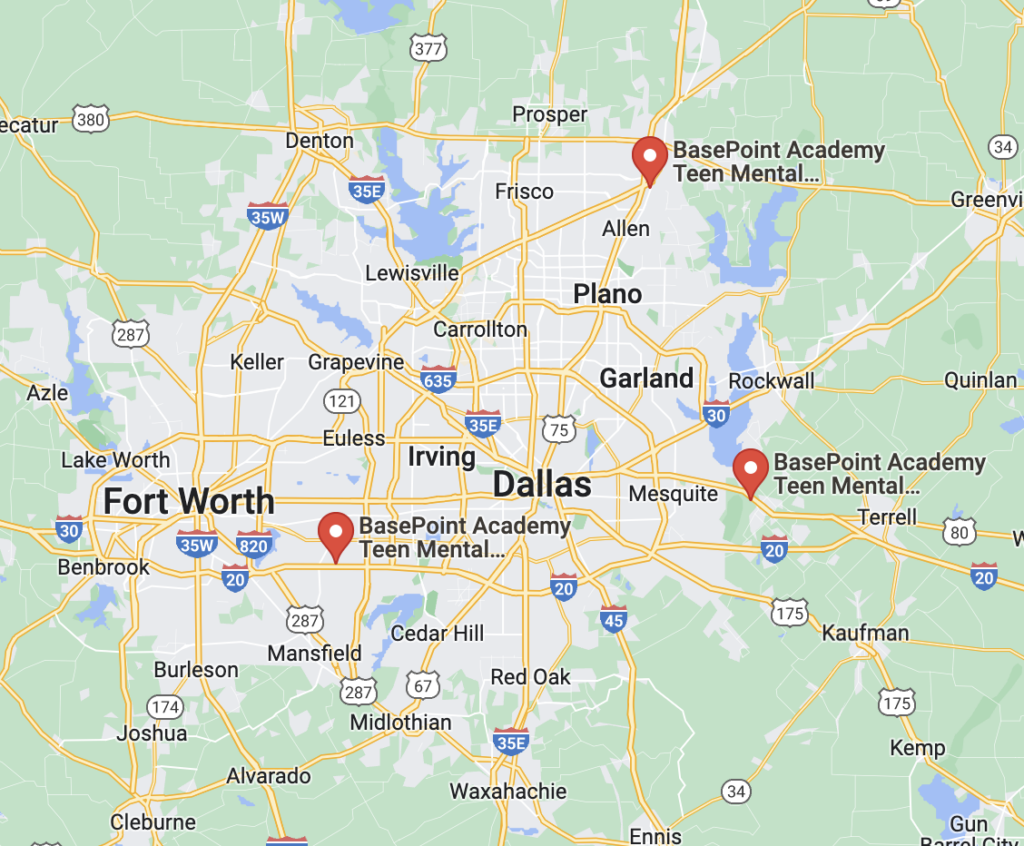
Contact BasePoint Academy today to schedule an initial OCD assessment for your teen in the Dallas-Fort Worth area. Our treatment centers in Arlington, Forney, Frisco, and McKinney offer convenient access to comprehensive mental health evaluations and services, ensuring effective care. We also proudly accept insurance coverage from many providers.
- Arlington, Texas: 3900 Arlington Highlands Blvd Suite 237, Arlington, TX 76018
- Forney, Texas: 713 W Broad St Suite 200, Forney, TX 75126
- Frisco, Texas: 8275 Judges Way #100i, Frisco, TX 75036
- McKinney, Texas: 4733 Medical Center Dr, McKinney, TX 75069
- North Richland Hills: 8479 Davis Blvd Suite 100, North Richland Hills, TX 76182
OCD Assessment in Arlington, Texas
In Tarrant County, Texas, Arlington is about 20 miles west of Dallas and 15 miles east of Fort Worth. As the seventh-most populous city in Texas, Arlington is a hub for business, education, and entertainment and home to major sports teams like the Dallas Cowboys and the Texas Rangers.
- BasePoint Academy – Arlington, Texas: 3900 Arlington Highlands Blvd Suite 237, Arlington, TX 76018
OCD Assessment in Forney, Texas
Forney is 20 miles east of Dallas in Kaufman County, Texas. Forney has a growing population and is recognized for its dynamic economic landscape. Despite its proximity to Dallas, Forney maintains a distinct identity, embodying a flourishing community balancing growth and vitality.
- BasePoint Academy – Forney, Texas: 713 W Broad St Suite 200, Forney, TX 75126
OCD Assessment in McKinney, Texas
McKinney in Collin County, Texas, is a vibrant city within the Dallas-Fort Worth metroplex. With over 230,000 residents, McKinney is home to major businesses and industries. Its distinctive character and dynamic economic landscape embody the essence of a flourishing urban center.
- BasePoint Academy – McKinney, Texas: 4733 Medical Center Dr, McKinney, TX 75069
OCD Assessment in Frisco, Texas
Frisco, in Collin County, Texas, is about 25 miles north of Dallas and is known for its rapid growth, strong school systems, and family focused community. As one of the fastest growing cities in the state, Frisco is home to major employers, sports venues, and vibrant neighborhoods.
- BasePoint Academy – Frisco, Texas: 8275 Judges Way #100i, Frisco, Texas, 75036
What Are the Symptoms of OCD in Adolescents?
Recognizing OCD in teens means watching for two core symptom types: obsessions, which are recurring, distressing thoughts, and compulsions, which are repetitive behaviors performed in response to those thoughts. Together, these symptoms can consume significant time and interfere with a teen’s academics, relationships, and daily life.
Obsessions may include:
- Fears of contamination or germs
- Unwanted aggressive or disturbing impulses
- Preoccupation with order, symmetry, or exactness
- Persistent doubts or intrusive, unwanted thoughts
Compulsions may include:
- Excessive or ritualized handwashing
- Repeatedly checking locks, appliances, or doors
- Arranging or organizing items in a specific order
- Performing mental rituals to neutralize distressing thoughts
Additional signs to watch for:
- Intense anxiety or distress when unable to complete rituals
- Hiding compulsive behaviors out of embarrassment or fear of judgment
- Withdrawal from school, social activities, or relationships due to time spent on rituals
- Declining academic performance with no clear academic cause
How Do Therapists Evaluate for OCD?
Therapists evaluate for OCD typically using a combination of clinical interviews, behavioral observations, and standardized mental health assessment questionnaires like the Yale-Brown Obsessive-Compulsive Scale — Self-Report (Y-BOCS-SR). Early diagnosis and intervention are crucial for effective OCD treatment, which helps your teen manage their symptoms.
During the evaluation, therapists ask about the nature and frequency of obsessive thoughts and compulsive behaviors your child is experiencing. They may also inquire about how these symptoms affect your teenager’s daily life, relationships, and overall well-being.
Additionally, therapists may use the mental health diagnostic criteria outlined in the Diagnostic and Statistical Manual of Mental Disorders (DSM-5) to determine if the symptoms meet the criteria for OCD. They may also assess for any co-occurring mental health conditions, as OCD often presents alongside anxiety disorders, depression, or other conditions. By conducting thorough psychological evaluations, therapists can tailor treatment plans that address your adolescent’s needs and symptoms.
If you’re concerned your child may be struggling with OCD, a comprehensive assessment and diagnosis from a licensed therapist can provide clarity and direction. Reach out to BasePoint Academy to learn more.
Contact BasePoint Academy Today
Contact us today to schedule a confidential assessment for your teen with a licensed clinician.
You can also get in touch to talk with our mental health experts about treatment needs, care options and your insurance coverage levels.
Call: (972) 357-1749Check Your InsuranceAre Obsessive-Compulsive Disorder Assessments Free and Confidential?
OCD assessments are commonly free and confidential. BasePoint Academy offers these assessments at no cost while ensuring your teen’s privacy. When seeking an OCD test for your child, it’s crucial that you choose a mental health care provider who respects your child’s privacy and understands the condition as it relates to adolescent development.
Privacy laws and ethical guidelines safeguard personal information and assessment results, ensuring a safe and secure experience that encourages you to seek help confidently. Reach out today to schedule an initial ODC assessment for your teen.
How to Get a Psychiatric OCD Assessment for a Teen in the Dallas-Fort Worth Metroplex
Parents or guardians can initiate an OCD assessment for their teen in the Dallas-Fort Worth Metroplex. Loved ones often are the ones to reach out on their teenager’s behalf. BasePoint Academy encourages family involvement, as it provides additional support and contributes to a thorough understanding of your teenager’s symptoms and situation.
To schedule your teen’s OCD assessment, call BasePoint Academy at (972) 357-1749 today. Our dedicated professionals conduct comprehensive OCD assessments for adolescents, using clinical interviews and psychological testing to fully understand your teen’s needs. By choosing BasePoint Academy, you can trust that your child will receive a detailed, confidential evaluation that leads to effective treatment.
What Questions May Be Asked During an OCD Assessment?
During the OCD screening process, clinicians may ask a variety of questions, including addiction-realted questions, to thoroughly assess your teen’s symptoms and their effect on daily life. Open and honest answers allow BasePoint Academy to make an accurate diagnosis. Here are some examples of questions you or your child might encounter, along with explanations of why they are important:
- Do you have repetitive thoughts that bother you and are difficult to control? This question helps identify obsessions, which are intrusive and distressing thoughts indicative of OCD. Understanding the nature and frequency of these thoughts is crucial for an OCD diagnosis.
- Do you feel the need to perform certain rituals or behaviors repeatedly to reduce anxiety or prevent something bad from happening? Compulsions are repetitive behaviors or mental acts that individuals feel driven to perform in response to obsessions. This question assesses the presence and effects of compulsive behaviors on daily functioning.
- How much time do you spend each day on these thoughts or behaviors? OCD symptoms often consume a significant amount of time and interfere with school, work, or relationships. Assessing the time spent on symptoms helps gauge the degree of impairment.
- Have these thoughts or behaviors caused distress or interfered with your daily activities or relationships? The effect of OCD on daily life and relationships is a key criterion for diagnosis. Understanding how symptoms affect functioning helps clinicians determine the level of impairment.
- Do you try to resist these thoughts or behaviors but find it challenging to do so? This question explores your child’s insight into their symptoms and efforts to control or resist obsessions and compulsions, which is essential for understanding their experience.
- Have you noticed any specific triggers that worsen your symptoms? Identifying triggers can provide insight into the circumstances that exacerbate OCD symptoms, helping to tailor treatment strategies and coping mechanisms for OCD.
- Do you have any other mental health concerns or symptoms, such as anxiety, depression, or difficulty concentrating? OCD commonly co-occurs with other mental health conditions. Assessing for additional symptoms helps formulate a comprehensive treatment plan that addresses all aspects of your child’s mental health.
- How do these symptoms impact your school performance, relationships with family and friends, and overall well-being? Understanding the broader effects of OCD symptoms allows clinicians assess functional impairment and the overall burden of the disorder on your child’s life.
- Do you use substances (such as alcohol, drugs, or medications) to cope with stress or anxiety? This question helps assess whether substance use is being used as a coping mechanism, which can affect the severity and management of OCD symptoms.
- Have you ever experienced difficulties controlling your use of substances or felt the need to cut down? Questions about substance use disorders are relevant as they can co-occur with OCD and affect overall mental health and treatment outcomes.
- Has substance use interfered with your daily activities, relationships, or responsibilities? Understanding the effect of substance use on functioning provides insight into potential challenges and areas needing support during treatment.
- Are there any family members or close contacts who have concerns about your substance use? This question gathers collateral information about substance use behaviors and their effects on social relationships and support systems.
- Do you have a history of treatment or interventions for substance use? Previous treatment history for substance use provides context for current behaviors and can influence treatment planning.
Who Can Perform Psychological OCD Assessments and Testing Near Dallas?
Many professionals are qualified to perform psychological OCD assessments and testing for adolescents near Dallas, Texas. These evaluations are typically conducted by licensed psychologists, neuropsychologists, and specialized clinical social workers with extensive expertise in administering and interpreting tests. They assess cognitive abilities, emotional functioning, personality traits, and mental health conditions precisely and thoroughly.
When seeking psychological testing for your adolescent, it’s crucial to choose a mental health treatment provider like BasePoint Academy, which is experienced in working with this demographic and knowledgeable about the evaluation tools relevant to adolescents’ needs.
Contact BasePoint Academy Today
Contact us today to schedule a confidential assessment for your teen with a licensed clinician.
You can also get in touch to talk with our mental health experts about treatment needs, care options and your insurance coverage levels.
Call: (972) 357-1749Check Your InsuranceWhen Is the Best Time to Schedule an OCD Test for My Teen at BasePoint Academy?
If you’re concerned about your child’s mental health and suspect they may be suffering from OCD, the best time to schedule an assessment at BasePoint Academy is as soon as possible. Early intervention is crucial in effectively managing OCD. BasePoint Academy offers flexible scheduling 7 days a week, from 7 a.m. to 7 p.m. CST, to accommodate your needs.
If your teenager experiences problems at school, in relationships, or with daily routines due to their symptoms, it’s crucial that you seek professional care. Scheduling a comprehensive evaluation is the first step toward effective treatment and improved mental health for your teen.
What Happens If My Child Is Diagnosed With OCD?
If your teen is diagnosed with OCD, BasePoint Academy can provide personalized, effective care. Our team will collaborate closely with you and your child to develop a comprehensive treatment plan that may include supportive counseling and OCD medications to address your teenager’s needs and circumstances.
This plan may include various therapeutic and holistic approaches to OCD, such as Exposure and Response Prevention (ERP), Cognitive-Behavioral Therapy (CBT), and mindfulness practices, to help your child manage their symptoms and regain a sense of stability and well-being.
Our supportive environment and compassionate professionals offer tools and strategies to help your child cope with their symptoms healthily and effectively. Each teen’s experience is unique, and our individualized approach ensures your child’s treatment plan evolves as they progress. We can empower your teenager to overcome challenges and thrive daily with renewed confidence and resilience.
What Is the Difference Between Screening, Testing, and Assessment for OCD?
While these terms are often used interchangeably, they carry distinct technical meanings. OCD screening usually involves using standardized tools to conduct brief evaluations to identify symptoms that may indicate OCD, potentially leading to further psychological testing. Testing refers to formal evaluations performed by trained professionals focusing on cognitive and emotional functioning to confirm a diagnosis and direct mental health treatment.
An assessment integrates screening, testing, and in-depth clinical evaluations to gather comprehensive information about your teen’s symptoms, medical history, and overall health. This holistic approach guarantees an accurate diagnosis and facilitates the creation of a personalized treatment plan to meet your teen’s needs.
Effective OCD Treatment for Adolescents at BasePoint Academy
We can help your teen address their OCD with expert care in a safe environment. Call today to discover long-term healing.
Statistics on OCD in Adolescents
- On average, children and teens live with symptoms of Obsessive-Compulsive Disorder (OCD) for 2.5 years before receiving a mental health assessment, and another 1.5 years may pass between diagnosis and first treatment, according to the International OCD Foundation.
- Youths experiencing depression alongside OCD show an increased risk of suicidality and overall impairment, according to the Journal of Obsessive-Compulsive and Related Disorders.
- According to UT Health Austin, OCD onset typically occurs during adolescence.
- According to NAMI, if a parent or sibling has OCD, there’s a nearly 25% likelihood that another immediate family member may also develop the condition.
- Women frequently report that their OCD symptoms emerged during or after puberty or pregnancy, and they commonly present with contamination-related and/or aggressive obsessions, a review published in Current Psychiatry Reports revealed.