

Confidential Personality Disorder Assessment and Testing for Texas Adolescents
If your teen’s thoughts, feelings, and behaviors diverge sharply from cultural norms, disrupt their daily functioning, and persist over time, a personality disorder may be at the root. BasePoint Academy’s personality disorder assessment for adolescents in Texas identifies the condition affecting your child and allows us to build a treatment plan around their needs.
How to Schedule a Confidential Personality Disorder Assessment for Your Teen
Contact BasePoint Academy today schedule a personality disorder assessment for your teenager. A psychological evaluation can assess your child’s cognitive state and guide the development of a personalized treatment plan. Our recovery centers in Arlington, Forney, Frisco, and McKinney, Texas, use diagnostic assessments to identify personality disorders and other conditions, including PTSD, bipolar disorder, OCD, ADHD, trauma, anxiety, and depression.
A mental health screening for teenagers can identify symptoms of a personality disorder, distinguish between cluster A, B, and C personality disorders, and rule out potential other conditions. Our comprehensive mental health evaluations help us create personality disorder treatment plans tailored to your child’s needs for optimal outcomes. Call us or complete our contact form to schedule a free personality disorder test for your teen.
What Is a Personality Disorder?
Characteristics of personality disorders include long-term patterns of behavior, thoughts, and feelings that significantly deviate from societal norms. These patterns are persistent and inflexible and can cause your teenager to experience considerable distress and impairment in personal, social, and occupational functioning.
The causes of personality disorders are complex and include a combination of genetic predispositions, early life experiences, and environmental factors. Symptoms vary widely but often include difficulty managing emotions, maintaining stable relationships, and behaving in socially acceptable ways. Your teen may experience intense, frequent mood swings, distorted thinking patterns, and impulsive or reckless behaviors.
The various types of personality disorders are broadly categorized into clusters. Cluster A includes disorders characterized by odd or eccentric behavior. Cluster B personality disorders involve dramatic, overly emotional, or unpredictable thinking or behavior, and cluster C disorders encompass disorders marked by anxious and fearful behavior.
BasePoint Academy Accepts Insurance for Personality Disorder Treatment
Our confidential assessment with a licensed clinician allows us to provide you with a recommendation for the appropriate level of care for your teen struggling with a personality disorder. We can also check your insurance coverage.
Call (972) 357-1749 or complete our inquiry form today to schedule a same-day assessment.









Teen Personality Disorder Treatment Admissions Inquiry Form
A Simple First Step for Teens Who May Be Struggling with a Personality Disorder
Ongoing challenges with emotions, relationships, or self-image can make it difficult for teens to navigate everyday life. This brief self check-in gives your teen an opportunity to reflect on how they’ve been feeling and whether additional support may be helpful.
{"component":"self-reflection-tool"}Contact BasePoint Academy Today
Contact us today to schedule a confidential assessment for your teen with a licensed clinician.
You can also get in touch to talk with our mental health experts about treatment needs, care options and your insurance coverage levels.
Call: (972) 357-1749Check Your InsuranceWhat Types of Personality Disorders Can My Teen Be Assessed For?
Understanding the types of personality disorders your teen can be assessed for is crucial to ensuring they receive the proper treatment. The Diagnostic and Statistical Manual of Mental Disorders, 5th Edition, Text Revision (DSM-5-TR), outlines 10 specific types; the following sections will briefly explore these personality disorder types and how they might manifest in your child.
Paranoid Personality Disorder (PPD)
Paranoid Personality Disorder (PPD) in teens may manifest as a pervasive distrust and suspicion of others, often interpreting their actions as malicious or harmful. Your teen might believe they are being deceived or exploited, be excessively wary of friends and family, and be reluctant to confide in others.
Psychological testing for PPD involves evaluating these patterns of thinking and behavior to determine the presence and extent of the disorder, allowing BasePoint Academy to provide appropriate intervention and support.
Schizoid Personality Disorder (SPD)
Assessing for Schizoid Personality Disorder (SPD) in your adolescent involves looking for signs of emotional detachment and a preference for solitary activities. Teens with SPD may seem indifferent to social relationships, show little interest in engaging with peers or family, and appear emotionally cold or aloof.
They might not seek close relationships and often choose activities requiring minimal social interaction. A schizoid personality disorder assessment for teens will help identify these patterns, allowing for tailored support and interventions.
Schizotypal Personality Disorder (STPD)
Teens with Schizotypal Personality Disorder (STPD) may exhibit odd beliefs or magical thinking, have peculiar speech or dress, and display social anxiety or discomfort around others. They might also have difficulty forming close relationships and interpret ordinary events as having special meanings. An STPD behavioral health assessment helps pinpoint these traits, providing a basis for appropriate support and treatment.
Antisocial Personality Disorder (ASPD)
Testing for Antisocial Personality Disorder (ASPD) focuses on assessing patterns of behavior that disregard and violate the rights of others. Teens with ASPD may exhibit deceitfulness, impulsivity, aggression, and a lack of remorse for their actions. They may repeatedly engage in illegal activities, lie or manipulate others for personal gain, and disregard societal norms and rules.
The standardized mental health assessment process for ASPD involves evaluating these behaviors over time and across different contexts to determine the presence and severity of the disorder, guiding interventions aimed at promoting healthier behaviors and relationships.
Narcissistic Personality Disorder
Testing for Narcissistic Personality Disorder (NPD) (NPD) involves identifying characteristics like an inflated sense of self-importance, a need for over-the-top admiration, and a lack of empathy for others. Teens with NPD may feel entitled, seek constant validation, and struggle to maintain healthy relationships due to their self-centered behavior. They might also display arrogance and exploit others for personal gain.
An NPD assessment identifies these patterns, guiding the development of effective intervention strategies.
Borderline Personality Disorder (BPD)
Teens with Borderline Personality Disorder (BPD) may experience rapid mood swings, have a fear of abandonment, and engage in risky or self-harming behaviors. They might also struggle with their self-image and have intense, unstable relationships. BPD testing involves looking for intense and unstable emotions, impulsive behaviors, and difficulties in relationships, allowing for the creation of tailored treatment plans.
Histrionic Personality Disorder (HPD)
Assessing for Histrionic Personality Disorder (HPD) in your teen involves identifying patterns of excessive emotionality and attention-seeking behavior. Adolescents with this type may constantly need approval, be uncomfortable when they are not the center of attention, and use their physical appearance to draw attention.
They might also exhibit rapidly shifting emotions and exaggerated emotional expressions. An HPD assessment helps the clinicians at BasePoint Academy recognize these behaviors, facilitating the development of targeted treatment.
Avoidant Personality Disorder (AVPD)
Testing for Avoidant Personality Disorder (AVPD) involves identifying patterns of extreme shyness, sensitivity to criticism, and social inhibition. Teenagers with AVPD may avoid social interactions and activities due to a fear of rejection or embarrassment, feel inadequate, and have a strong desire for acceptance and affection despite their reluctance to engage with others.
An avoidant personality disorder assessment for adolescents identifies these traits, guiding the creation of tailored intervention plans to help them build confidence and improve their social skills.
Dependent Personality Disorder (DPD)
When evaluating for Dependent Personality Disorder (DPD), BasePoint Academy looks for signs like an excessive need to be taken care of and a fear of separation. Teens with DPD may demonstrate submissive and clingy behavior, struggle to make decisions without reassurance from others, find it challenging to be independent, make significant efforts to seek support, and feel helpless when alone.
Conducting a DPD assessment allows us to identify these patterns, allowing for the creation of personalized intervention strategies to promote greater independence and self-confidence.
Obsessive-Compulsive Personality Disorder (OCPD)
Assessing for Obsessive-Compulsive Personality Disorder (OCPD) involves identifying patterns of perfectionism, rigidity, and preoccupation with order and control. Teens with OCPD may be excessively focused on rules, schedules, and details, often to the detriment of flexibility and efficiency. They might struggle with delegating tasks, be highly critical of themselves and others, and have difficulty relaxing.
An OCPD assessment helps identify these traits, guiding the creation of tailored treatment to promote a healthier balance between order and spontaneity.
BasePoint Academy Accepts Health Insurance
We accept most major health insurance providers in Texas and can check your treatment coverage levels on your behalf.
Confidential Personality Disorder Assessments for Teens Near Dallas
Contact BasePoint Academy to schedule a complimentary personality disorder assessment for your teen near Dallas. Our treatment centers in Arlington, Forney, Frisco, and McKinney offer convenient access to comprehensive services that address the nuanced challenges teenagers face. We’re also proud to accept insurance coverage from many providers. Call (972) 357-1749 today to get started.
- Arlington, Texas: 3900 Arlington Highlands Blvd Suite 237, Arlington, TX 76018
- Forney, Texas: 713 W Broad St Suite 200, Forney, TX 75126
- Frisco, Texas: 8275 Judges Way #100i, Frisco, TX 75036
- McKinney, Texas: 4733 Medical Center Dr, McKinney, TX 75069
- North Richland Hills: 8479 Davis Blvd Suite 100, North Richland Hills, TX 76182
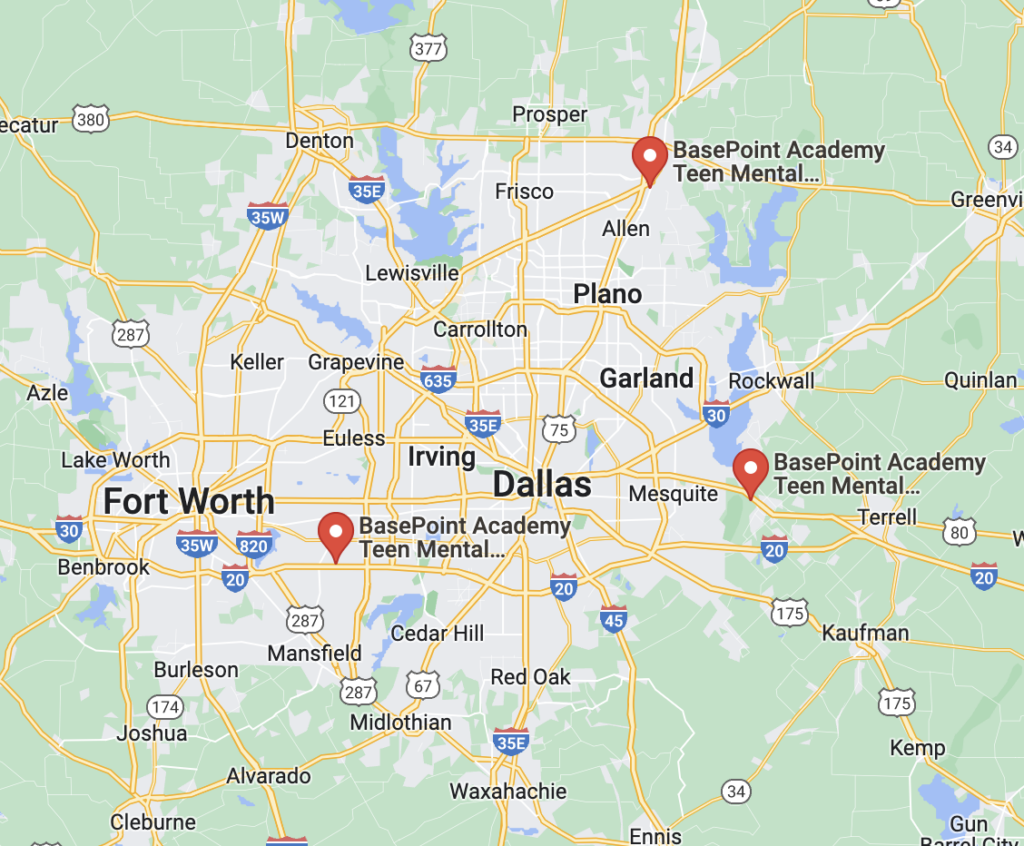
Personality Disorder Assessment in Arlington, Texas
In Tarrant County, Texas, Arlington is about 20 miles west of Dallas and 15 miles east of Fort Worth. As the seventh-most populous city in Texas, Arlington is a hub for business, education, and entertainment and home to major sports teams like the Dallas Cowboys and the Texas Rangers.
- BasePoint Academy – Arlington, Texas: 3900 Arlington Highlands Blvd Suite 237, Arlington, TX 76018
Personality Disorder Assessment in Forney, Texas
Forney is 20 miles east of Dallas in Kaufman County, Texas. Forney has a growing population and is recognized for its dynamic economic landscape. Despite its proximity to Dallas, Forney maintains a distinct identity, embodying a flourishing community balancing growth and vitality.
- BasePoint Academy – Forney, Texas: 713 W Broad St Suite 200, Forney, TX 75126
Personality Disorder Assessment in McKinney, Texas
McKinney in Collin County, Texas, is a vibrant city within the Dallas-Fort Worth metroplex. With over 230,000 residents, McKinney is home to major businesses and industries. Its distinctive character and dynamic economic landscape embody the essence of a flourishing urban center.
- BasePoint Academy – McKinney, Texas: 4733 Medical Center Dr, McKinney, TX 75069
Personality Disorder Assessment in Frisco, Texas
Frisco, in Collin County, Texas, is about 25 miles north of Dallas and is known for its rapid growth, strong school systems, and family focused community. As one of the fastest growing cities in the state, Frisco is home to major employers, sports venues, and vibrant neighborhoods.
- BasePoint Academy – Frisco, Texas: 8275 Judges Way #100i, Frisco, Texas, 75036
What Are the Symptoms of a Personality Disorder in My Child?
Signs and symptoms of a personality disorder in your child can include persistent patterns of behavior, thinking, and feeling that deviate from cultural norms, cause distress, and impair daily functioning. There are several types of personality disorders, and their manifestations vary significantly from one teenager to the next.
Personality disorder symptoms often become noticeable during the teenage years when social and personal expectations increase. For example, a child with Borderline Personality Disorder (BPD) may experience intense mood swings and fear of abandonment, while a child with Narcissistic Personality Disorder (NPD) may display an inflated sense of self-importance and a lack of empathy.
Recognizing these patterns early can lead to timely intervention and support. Contact BasePoint Academy today to speak with a representative if you notice any signs that may indicate a personality disorder in your adolescent.
Who Can Perform Psychological Personality Disorder Testing Near Dallas?
In Dallas, several qualified professionals can perform psychological personality disorder assessments and testing for adolescents. Look for licensed psychologists specializing in child and adolescent psychology; they have the training and expertise to conduct comprehensive evaluations. Pediatric psychiatrists, who are medical doctors specializing in mental health for children and teens, also perform assessments and can provide diagnostic clarity.
These professionals use various mental health evaluation tools, including structured interviews, behavioral observations, and standardized psychological tests, to assess for personality disorders and other mental health concerns. When seeking an assessment for mental disorders in adolescents, contact providers directly to inquire about their specific expertise and approach to evaluating personality disorders. Choosing a qualified professional ensures your child receives an accurate diagnosis and appropriate recommendations for treatment and support.
How Do Therapists Evaluate and Assess for Personality Disorders?
Therapists evaluate and assess for personality disorders through comprehensive mental health assessment interviews and observation of behaviors and symptoms. They use standardized mental health diagnostic criteria from manuals like the DSM-5 to identify patterns of thoughts, emotions, and behaviors that indicate a potential disorder. They may also employ tools like the Standardized Assessment of Personality Scale (SAPAS).
Additionally, therapists may incorporate input from parents, teachers, or others close to the child to gather a holistic understanding of their functioning and relationships. This thorough clinical assessment allows the therapists at BasePoint Academy to accurately diagnose your teen’s personality disorder and create a personalized treatment plan to address their needs and challenges.
Contact BasePoint Academy Today
Contact us today to schedule a confidential assessment for your teen with a licensed clinician.
You can also get in touch to talk with our mental health experts about treatment needs, care options and your insurance coverage levels.
Call: (972) 357-1749Check Your InsuranceWhat Questions May Be Asked During a Personality Disorder Assessment?
During testing for personality disorders at BasePoint Academy, you and your teenager can expect mental health questionnaires aimed at gathering comprehensive information about your adolescent’s behaviors, emotions, and relationships. You may also encounter addiction-related questions; the National Institute of Mental Health (NIMH) reports approximately 22.6% of people diagnosed with a personality disorder also have a substance use disorder.
Here are some typical questions and explanations of why they are relevant:
Questions for Parents
- Can you describe any family history of mental health issues or personality disorders? Understanding family dynamics and genetic predispositions can provide insights into potential risk factors.
- How was your child’s early development (e.g., infancy, childhood)? Any notable milestones or difficulties? Early developmental issues can sometimes correlate with later emotional and behavioral challenges.
- What behaviors concern you the most about your child? This helps in identifying specific behaviors that may be indicative of personality disorders or other mental health conditions.
- How is your child doing academically and socially? Assessing school performance and social interactions helps us gauge the effect of symptoms on daily functioning.
- Are there specific situations or stressors that seem to worsen your child’s symptoms? Identifying triggers helps us understand the environmental factors influencing your adolescent’s behavior.
Questions for Teens
- How do you see yourself? Can you describe your strengths and weaknesses? This helps us gauge self-awareness and provides insight into personal characteristics.
- What emotions do you most frequently experience? How intense are they? Understanding emotional regulation and the intensity of feelings is crucial in diagnosing personality disorders.
- Tell me about your friendships and relationships with peers. Do you find it easy to trust others? Assessing interpersonal relationships helps BasePoint understand patterns of behavior in social contexts.
- Can you describe any of your behaviors that you feel are different from those of your peers? This question allows us to identify unique behaviors or coping mechanisms that may be symptomatic.
- How do your symptoms affect your daily life, such as school, hobbies, or family relationships? This provides insights into the functional impairment caused by a potential personality disorder.
Addiction-Related Questions
- Have you ever used drugs or alcohol? If yes, can you describe how often and in what quantities? Substance use can affect your teen’s mental health and behavior, which is relevant to understanding personality traits and disorders.
- Do you ever feel urges or impulses to use substances or engage in risky behaviors? Impulse control issues can be linked to cluster B personality disorders and may indicate underlying problems that need addressing.
- Has substance use caused problems in your relationships, school, or work? This helps assess the functional effects of substance use and its potential role in exacerbating or masking personality disorder symptoms.
- Have you ever received treatment for substance use? Understanding past treatment can provide insights into your child’s coping skills and readiness for change.
- Is there a family history of substance abuse or addiction? Family history can indicate genetic predispositions and environmental influences that contribute to substance use and personality traits.
Are Personality Disorder Assessments Confidential?
Yes, personality disorder assessments are typically offered with privacy protections. The mental health professionals at BasePoint Academy prioritize confidentiality to ensure the information shared during assessments remains private between the client and the therapist. Assessments are conducted in a confidential setting where your child can feel comfortable discussing personal thoughts and experiences without fear of judgment or disclosure to others.
While BasePoint Academy offers confidential assessments as part of our mental health treatment admissions process, it’s essential to confirm specific details regarding confidentiality and any associated costs before scheduling an appointment.
Can I Schedule a Personality Disorder Assessment for My Adolescent Near Dallas?
Yes, you can schedule a personality disorder assessment for your adolescent in the Dallas-Fort Worth area. Parents and guardians often make the initial call to BasePoint Academy. We offer a comprehensive assessment of adolescent disorders as part of the admissions process.
Call us today to schedule your child’s confidential assessment. Taking this step can lead to effective personality disorder treatment that wholly supports your child’s mental well-being.
Contact BasePoint Academy Today
Contact us today to schedule a confidential assessment for your teen with a licensed clinician.
You can also get in touch to talk with our mental health experts about treatment needs, care options and your insurance coverage levels.
Call: (972) 357-1749Check Your InsuranceWhen Is the Best Time to Schedule a Personality Disorder Assessment at BasePoint Academy?
If you’re concerned about your teenager’s mental health and suspect a personality disorder, schedule an assessment at BasePoint Academy as soon as possible. We offer flexible scheduling and operate from 7 a.m. to 7 p.m. CST 7 days a week to ensure convenient options that fit your family’s schedule.
Early intervention is crucial for effective treatment of a personality disorder, so reaching out to us promptly allows clinicians to evaluate your teen’s symptoms and provide timely recommendations. By initiating this process as soon as possible, you ensure your child receives the care they need to manage their mental health effectively.
What Happens If My Child Is Diagnosed with a Personality Disorder?
If your child is diagnosed with a personality disorder, it’s essential to remember that early diagnosis opens the door to effective treatment. BasePoint Academy will collaborate closely with you and your child to create a treatment plan tailored to their specific needs.
This plan may include therapy sessions, medication management if necessary, and support services that help your child navigate and manage their symptoms. Understanding and addressing a personality disorder early can significantly improve your teen’s quality of life. Through targeted interventions and ongoing support from the experienced professionals at BasePoint Academy, your teen can develop coping mechanisms, improve their emotional well-being, and achieve their fullest potential.
What Is the Difference Between Screening, Testing, and Assessment for Personality Disorder?
The terms screening, testing, and assessment are often used interchangeably, though they carry distinct technical meanings. Mental health screening involves using standardized tools to conduct brief evaluations to identify symptoms that may indicate a personality disorder, potentially leading to further psychological testing. Testing refers to formal evaluations focusing on cognitive and emotional functioning to confirm a diagnosis and guide treatment.
An assessment combines screening, testing, and thorough clinical evaluations to collect comprehensive information about your teen’s symptoms, medical background, and overall well-being. This comprehensive approach guarantees an accurate diagnosis and allows the clinicians at BasePoint Academy develop a tailored treatment plan to effectively address your teen’s needs.
Effective Teen Personality Disorder Treatment at BasePoint Academy
We can help your teen address their personality disorder with expert care in a safe environment. Call today to discover long-term healing.
Personality Disorder Statistics and Info for Adolescents
- According to current clinical guidelines in the Diagnostic and Statistical Manual of Mental Disorders, 5th edition, text revision (DSM-5-TR), doctors are permitted to diagnose personality disorders in children under eighteen, Healthline reports. The exception to this is antisocial personality disorder, which requires the individual to be over 18 years old for diagnosis.
- In a large-scale Danish study in European Child & Adolescent Psychiatry conducted in 2023 with over 115,000 children and adolescents, the most prevalent personality disorders identified were borderline personality disorder, unspecified personality disorder, and schizotypal personality disorder.
- In a study in Adolescent Health, Medicine and Therapeutics on adolescents with personality disorders and severe psychiatric stigma, borderline personality disorder was the most common diagnosis (25.2%), followed by avoidant personality disorder (16.0%) and otherwise specified personality disorders (5.3%); all other personality disorder diagnoses — including paranoid, schizoid, schizotypal, narcissistic, histrionic, dependent, and passive-aggressive — each appeared in fewer than 5% of patients, and antisocial personality disorder was excluded.
- Recent research indicates that adolescents who have experienced trauma, neglect, or unstable family environments may face an increased risk of developing personality disorders, according to Diagnostics (Basel). Specifically, studies suggest a notable correlation between strained parent-child relationships and the onset of Borderline Personality Disorder (BPD).
- Mental Health America reports Borderline Personality Disorder (BPD) frequently occurs alongside other conditions, including substance use disorders, depression, eating disorders, and other personality disorders.