

Obsessive-Compulsive Disorder (OCD) Intensive Outpatient Program for Adolescents in Dallas, Texas
Obsessive Compulsive Disorder (OCD) is frequently unrecognized, underdiagnosed, and undertreated in adolescents. When left untreated, OCD can interfere with school performance, relationships, daily routines, and emotional well being. BasePoint Academy offers a specialized Intensive Outpatient Program (IOP) for teens with OCD in Dallas, Texas, providing structured mental health support while allowing adolescents to continue living at home and participating in daily life.
Our adolescent OCD IOP programs combine evidence based therapies, psychiatric support, and individualized treatment planning to help teens manage intrusive thoughts, compulsive behaviors, and co occurring mental health concerns. BasePoint Academy’s Dallas area facilities are staffed with experienced mental health professionals who understand the unique treatment needs of adolescents and young adults.
Call (469) 273-1732 today to speak with an admissions specialist, verify your insurance coverage, and learn more about our specialized OCD treatment programs for adolescents.
What Is Obsessive-Compulsive Disorder (OCD)?
Obsessive-Compulsive Disorder (OCD) is a mental health condition with symptoms of persistent and unwanted thoughts called obsessions. The thoughts lead to repetitive behaviors a person feels they are driven to perform; these are compulsions. Obsessions and compulsions interfere significantly with daily activities and can cause substantial mental distress. The exact cause of OCD is not fully understood.
People with OCD may realize their thoughts and behaviors don’t make sense, but they cannot control them without getting help. OCD compulsions manifest in various forms, such as excessive cleaning, repeated checking of things, or mental acts like praying or counting. These behaviors are intended to prevent or reduce anxiety that’s related to the unwanted thoughts, or obsessions. The OCD sufferer might hope the compulsion prevents a feared event or situation. However, the relief is temporary, and a compulsive cycle repeats. Treatment typically involves therapy, medication, or a combination of both that are aimed at reducing the behaviors and managing the thoughts.
Insurance Coverage for Teen OCD IOP
A confidential assessment with one of our licensed clinicians will allow us to recommend the appropriate level of care for your teen struggling with obsessive-compulsive disorder. We can also check your insurance coverage levels.
Call (972) 357-1749 or complete our inquiry form today to schedule a same-day assessment.






Teen OCD IOP Admissions
What Types of Teenage OCD Are Treated at Intensive Outpatient Programs in Dallas?
Several types of obsessive-compulsive disorders require intensive therapy programs to address adolescents’ needs. The following are some of the types of OCD, but this not a complete list. Call BasePoint Academy today for more information about our comprehensive outpatient services and how to help your teen with OCD.
Scrupulosity OCD
Scrupulosity OCD involves intense fears around moral or religious issues. This causes your teenager disproportionate worry about sinning or offending a higher power. Teens may engage in compulsive behaviors such as excessive praying, confession, or reassurance-seeking to alleviate their spiritual anxiety. However, these actions typically only temporarily relieve intrusive thoughts about morality and piety.
Pure Obsessional OCD (Pure O)
Pure obsessional OCD is also called Pure O. Distressing and intrusive thoughts characterize the condition, which does not come with visible compulsions. With Pure O, adolescents experience obsessive fears and anxieties, such as thoughts of harming a loved one or unwanted sexual images. They try to neutralize these through mental acts or internal rituals.
Social OCD
Social OCD revolves around obsessive fears related to social interactions, such as the fear of being negatively judged by others. Teenagers might obsess over past social interactions and worry excessively about their behavior and social situations. This can manifest as compulsions, including mentally reviewing conversations, excessive preparation for social events, or avoiding social situations altogether.
Self-Harm OCD
This type of OCD involves intrusive thoughts or urges about self-injury or suicide, even when your teenager has no actual desire to hurt themselves. The obsessive thoughts are distressing and unwanted. Your teenager may engage in compulsive behaviors to check or ensure that they’re safe, such as removing sharp objects or looking for reassurance from others to prevent self-harm.
Academic OCD
Academic OCD focuses on the obsessive need for academic perfection and a fear of failure. Students with this subtype may spend excessive hours studying, repeatedly checking their work for mistakes, or struggling to complete assignments because they haven’t done them perfectly. This can lead to significant stress and impaired academic performance because of the inefficiency these compulsions cause.
Existential OCD
Existential OCD is characterized by excessive and intrusive thoughts about philosophical questions that don’t have clear answers or solutions (for example, questions about the meaning of life or what happens after death). Existential OCD causes your teenager to ruminate on these deep questions, seeking answers or reassurance. This significantly impairs their ability to function each day.
What Are the Signs and Symptoms of OCD in My Teen?
Identifying the signs and symptoms of OCD in teens can be challenging since typical adolescent behaviors might mask or resemble these symptoms. However, there are distinct indicators to watch for if you suspect your teenager might be struggling with OCD. One of the most common signs of OCD in teens is an overwhelming preoccupation with their environment.
For example, you may notice they have an overwhelming preoccupation with order, symmetry, or precision and experience noticeable distress when things do not align. Your teenager may repeatedly check the doors, locks, or appliances to be sure they are safe. You might see excessive hand washing, showering, or cleaning activities driven by contamination fears. Your teenager might insist on repeating certain words, phrases, or prayers, or they might ask for reassurance excessively.
Another significant symptom is avoidance of places or situations that might trigger your teen’s obsessions. For example, a teenager who is afraid of germs might avoid a public bathroom. You might notice they develop ritualistic behaviors they feel compelled to do in a specific sequence that helps them ward off anxiety or prevent a perceived stressful event. The rituals can be time-consuming and interfere with their daily life.
If these signs persist or cause significant stress at home, school, or work, consult a mental health professional. Early intervention is crucial in managing OCD effectively. It can help your teenager regain control and reduce the effects of OCD on their life. The following are some of the common OCD symptoms in teens.
- Repetitive behaviors
- Excessive cleanliness
- Need for order and symmetry
- Ritualistic behaviors
- Intrusive thoughts
- A compulsion to check things
- Hoarding
- Fear of being harmed
- Avoiding situations that trigger symptoms
- Continual request for reassurance
- Emotional distress
- Noticeable decline in school performance
- Difficulties in social relationships

What Is an Intensive Outpatient Program (IOP) for Teens with OCD?
An IOP is designed to address psychiatric disorders in adolescents who don’t require full-time hospitalization. Your teenager’s customized program might include multiple weekly individual, group, or family therapy sessions. An IOP for OCD treatment might involve Exposure and Response Prevention (ERP), Cognitive-Behavioral Therapy (CBT), and Dialectical Behavior Therapy (DBT).
The programs deliver intensive treatment that’s more frequent and longer in duration than a traditional outpatient therapy session. This allows for a concentrated effort to combat OCD cycles. By using a structured approach, an IOP for OCD allows your teenager to develop effective strategies for reducing compulsive behaviors and addressing the underlying thoughts that drive the condition. IOPs are especially beneficial for adolescents who need a bridge between residential care and outpatient appointments.
BasePoint Academy’s IOP is a flexible program that allows your teenager to continue with some of their school and work obligations while receiving comprehensive mental health support. Your teen’s program may also integrate educational support to help them manage their schoolwork alongside treatment. Combining the rigors of structured treatment with the flexibility of outpatient care, an IOP supports your teenager by helping them develop coping skills as they navigate challenges. This makes it a vital resource for families who are seeking effective in-person or online OCD management without full-time residential care.
What Are the Differences Between IOPs and PHPs for OCD Treatment in Teens?
Intensive Outpatient Programs (IOPs) and Partial Hospitalization Programs (PHPs) are distinct approaches to obsessive-compulsive disorder treatment. The primary difference is in the intensity and time commitment between the two programs. During an IOP, teenagers attend therapy several times a week for a few hours each session, which allows them to live at home and continue schooling.
On the other hand, a PHP is more intensive and typically requires your teenager’s attendance most days of the week for most of the day. Both programs involve structured therapy, but a PHP provides a higher level of care, resembling that of an inpatient treatment program, while still allowing your teenager to return home in the evening. This is beneficial when your teen needs more support than an IOP can offer but does not need 24/7 supervision.
A PHP often includes a broader range of therapeutic interventions and more frequent meetings with BasePoint Academy’s psychiatric staff. This makes PHPs more suitable for adolescents with more severe symptoms or those who are transitioning from an inpatient program. An IOP for OCD is often used as a step down from a PHP or for managing symptoms that are disruptive but not debilitating.
What Therapeutic Approaches Are Offered in an IOP for OCD Near Dallas, Texas?

Your teen’s IOP for OCD near Dallas, Texas, may include several types of evidence-based therapy. The following are some examples of the types of therapies, but it is not a complete list. Reach out to BasePoint Academy to learn more about our specialized adolescent programming and aftercare support services for OCD recovery.
Dialectical Behavior Therapy (DBT)
Dialectical Behavior Therapy (DBT) is a type of cognitive-behavioral therapy that was initially designed to treat borderline personality disorder. Since then, it has been adapted for use in treating other mental health conditions, including OCD. DBT focuses on teaching your teenager the skills they need to cope with stress, regulate their emotions, and improve their relationships with others.
An IOP for teens struggling with OCD may use this therapeutic technique, which incorporates mindfulness as a core component. DBT can take place during individual and group sessions and helps teenagers accept and tolerate the intense emotions and thoughts associated with OCD. Your teen will learn to accept their feelings while changing harmful behaviors and thoughts.
Experiential Therapy
Experiential therapy engages adolescents in activities like role-playing, arts and crafts, music, animal care, or other recreational activities to help them confront their fears and anxieties in a controlled and therapeutic environment. This approach encourages teenagers to tap into their emotions and experiences through hands-on and reflective activities.
This facilitates deeper insight into the behaviors and triggers associated with OCD. Experiential therapy is particularly effective in helping teens break through emotional barriers and discover new ways to approach their thoughts and behaviors.
Family Therapy
Family therapy for teens involves the whole family unit in the treatment process so you can collectively better manage the disorder. This type of therapy educates your family about OCD and helps you understand compulsions and obsessions from the adolescent’s perspective.
Therapy teaches the family unit effective support techniques and improved communication skills to reduce conflict. These strategies ensure the home is a supportive environment that facilitates your teenager’s OCD symptom management.
Psychodynamic Therapy
Psychodynamic therapy techniques explore the psychological forces underlying your adolescent’s OCD. These might include unresolved conflicts and past experiences. This therapy delves into the emotional background of your teen’s disorder, uncovering hidden patterns and meanings in their thoughts and behaviors.
Outpatient psychodynamic therapy techniques may include free association, examination of transfers and defense mechanisms, and interpretation. The goal is to help your teenager gain insight into their condition and resolve internal psychological conflicts that drive compulsive behaviors.
Cognitive-Behavioral Therapy
Cognitive-Behavioral Therapy (CBT) focuses on relationships between thoughts, feelings, and behaviors. Exposure and Response Prevention (ERP), which exposes teens to their fears or obsessions in a controlled setting, is a specialized form of CBT and a standard treatment for OCD.
This type of therapy is action-oriented and aims to change the thinking patterns that lead to distressing symptoms and helps your teenager learn to resist the urge to perform compulsive behaviors.
Individual and Person-Centered Therapy
Individual and person-centered treatment emphasizes a tailored approach to OCD therapy that focuses on your teenager’s needs, goals, and personality. This treatment modality views the teen as capable of self-understanding and personal growth. Therapists use this behavioral health-intensive treatment approach to create a supportive and non-judgmental environment.
This type of outpatient care integrates techniques from various disciplines based on what will most benefit your teenager. The core of person-centered therapy is to build a strong therapeutic alliance that empowers your teen to explore and understand their OCD while developing personalized strategies for symptom management.
Group Therapy
Group therapy is a supportive environment in which adolescents with OCD connect with peers facing similar challenges. This therapy format allows your teenager to share their experiences, coping strategies, and successes. It also reduces feelings of isolation and OCD stigma.
A therapist facilitates group therapy and may incorporate cognitive-behavioral therapy techniques. Group therapy may be included in your teenager’s customized intensive outpatient behavioral therapy program.
BasePoint Academy Accepts health Insurance
We accept most major health insurance providers in Texas and can check your treatment coverage levels on your behalf.
IOPs for Teens with Obsessive-Compulsive Disorder in the Dallas, Texas, Area
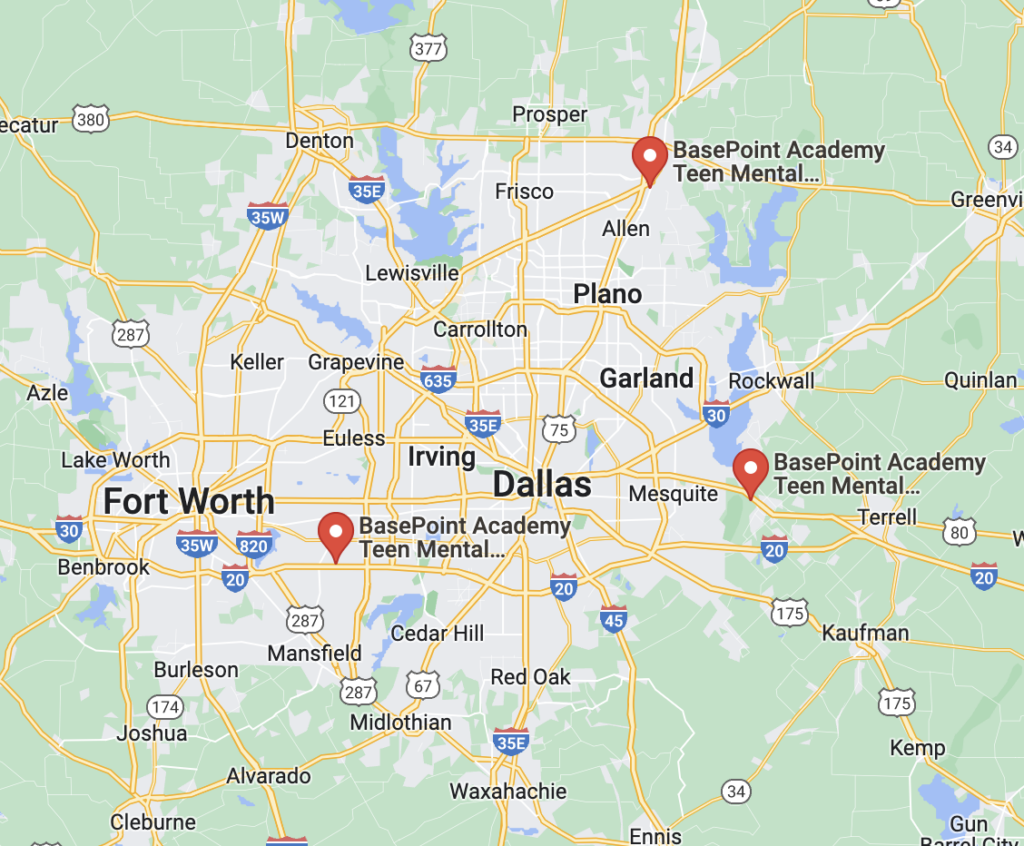
BasePoint Academy has several facilities in the Dallas-Fort Worth area. Our therapists are educated and experienced in treating adolescents with mental health conditions like OCD. Call (469) 273-1403 today for more information.
- Arlington, Texas: 3900 Arlington Highlands Blvd Suite 237, Arlington, TX 76018
- Forney, Texas: 713 W Broad St Suite 200, Forney, TX 75126
- Frisco, Texas: 8275 Judges Way #100i, Frisco, TX 75036
- McKinney, Texas: 4733 Medical Center Dr, McKinney, TX 75069
What Is the BasePoint Difference?

7am to 7pm CST
7 Days a Week

Full Time Physican
On Site

We Transport
To and From

Therapy Involving
the Whole Family

Family
Owned

Does Health Insurance Cover IOPs for Teens with OCD in Dallas, TX?
Yes, most health insurance providers cover Intensive Outpatient Programs (IOPs) for teens with OCD in the Dallas area. BasePoint Academy accepts plans from most major health insurance providers, including Blue Cross Blue Shield of Texas, UnitedHealthcare, Aetna, Cigna, and Humana. Your insurance plan may require prior authorization or have certain limitations.
Before enrolling your teen in an OCD treatment program, you must understand your coverage so you don’t face financial surprises. To determine whether your plan will cover an IOP for OCD, review your policy documents and reach out to BasePoint Academy. We’ll verify your insurance coverage and identify any potential out-of-pocket costs.

Are There Confidential OCD Assessments for Teens?
OCD symptoms in teens can result in emotional instability that is challenging for parents and other family members. A confidential OCD assessment with BasePoint Academy will answer your questions about your teen’s obsessive-compulsive disorder and self-harm, relationships, and emotional regulation. Each of these factors affects your teenager and your family life.
Our assessments allows us to provide treatment recommendations so you can make informed decisions about your teenager’s care. Contact us for more information about our programs for adolescents and to request a confidential OCD assessment.
What Is the Admissions Process for Intensive Outpatient Treatment for Teens with OCD?
At BasePoint Academy, the admission process for an IOP for teens with OCD follows a comprehensive treatment plan tailored to your adolescent’s needs. The following steps pave the way for your teen to begin recovery from obsessive-compulsive disorder:
- Initial Phone Contact: The admission specialists can accomplish several steps during your initial phone call to BasePoint Academy. They will answer your questions about our adolescent treatment programs, verify your insurance, and offer a confidential initial assessment.
- Insurance Verification: If for some reason the admission specialist does not verify your insurance during the first phone call, we will confirm your benefits and estimate your potential out-of-pocket costs. We will also connect you with our financial counselors, who can help you find financial assistance, if needed
- Comprehensive Evaluation: Your teenager will then undergo a more comprehensive evaluation that forms the foundation of their customized treatment plan. Their plan will address their OCD, emotional regulation, and any other mental or emotional conditions they may be facing.
- Admission Coordination and Orientation: We will coordinate to complete paperwork. On your teen’s first day of treatment, they will participate in an orientation to the facility and learn about their treatment program.
- Active Participation and Progress Monitoring: We expect your teen to participate actively in the program at BasePoint Academy. Our therapists will routinely monitor your teenager’s progress and adjust their plan as necessary.
How Much Does an OCD Intensive Outpatient Program for Adolescents Cost with Health Insurance Coverage?
If you have health insurance, the cost of an Intensive Outpatient Program (IOP) for adolescents with OCD varies. The cost depends on several factors, including your health plan details. Adjusted for inflation, the average cost of an IOP ranges from $1,908 to $7,969, depending on program length and intensity.
Insurance often covers a portion of the cost, but you will still have out-of-pocket expenses like deductibles, copays, and coinsurance. It’s essential to precisely estimate these potential out-of-pocket expenses so you are not surprised by a medical bill. The admissions specialist at BasePoint Academy can do this quickly and easily for you during your first phone call.
How Much Does a Teen IOP for OCD Treatment Cost Without Health Insurance?
The cost of teen OCD treatment at BasePoint Academy without insurance coverage typically ranges from $1,908 to $7,969, adjusted for inflation, depending on program length and intensity. The therapist’s experience and the type of evidence-based therapy used may also influence the cost.
While the cost of an IOP may feel challenging, there is a far higher cost when your teenager goes without treatment. They may have difficulty with relationships, experience reduced school and work performance, and be at a higher risk of co-occurring mental health conditions. Call (469) 273-1403 to speak with our admission specialists. They’ll answer your questions and connect you with a financial counselor who can help you find financial aid in the community or offer a payment plan when you qualify.
Why Should I Enroll My Teen Child in an IOP for OCD at BasePoint Academy?
The OCD IOP at BasePoint Academy provides your teenager with a comprehensive, evidence-based approach to treatment. BasePoint specializes in adolescent mental health, offering targeted therapies that address the needs of teenagers struggling with OCD. Our programs integrate individual therapy, group counseling, and family involvement to produce an effective treatment protocol.
BasePoint is a supportive environment that encourages your teenager to engage actively in their recovery while still being able to meet some of their daily obligations at work or school. The structured setting allows them to receive consistent treatment, which is essential for managing OCD effectively.
Additionally, we provide access to specialized mental health professionals who are experienced in dealing with the complexities of adolescent OCD. This approach reduces symptoms, empowers your teenager and family with strategies for long-term manage symptom management, and fosters resilience, improving your teenager’s overall quality of life.
Contact BasePoint Academy Today
Is your teen showing symptoms of obsessive-compulsive disorder? Contact BasePoint Academy today to discuss a treatment plan for your teen.
Statistics on Obsessive-Compulsive Disorders Among Teens in Texas
- Obsessive-Compulsive Disorder (OCD) is frequently unrecognized, under-diagnosed, and under-treated, according to Texas Children’s.
- While obsessive-compulsive disorder can occur at any age, the International OCD Foundation indicates it tends to first appear between ages of 7 and 12 or around age 20, between the late teen years and young adulthood.
- A study designed by the Texas Youth Depression and Suicide Research Network examined 797 depressed youth ages 8 to 20. Of these, 15.5% had a co-morbid OCD diagnosis, and those with OCD showed higher levels of suicidality and overall impairment than peers with depression alone, according to the Journal of Obsessive-Compulsive and Related Disorders.
- Depressed youths with co-morbid OCD showed higher depression severity, irritability, and insomnia, as well as lower physical functioning, resilience, and greater difficulty in school compared to depressed youth with no co-morbidities, according to the Texas Child Mental Health Care Consortium’s Texas Youth Depression & Suicide Research Network.
- Youths with OCD and Major Depressive Disorder (MDD) had more severe depression than those with MDD alone, with 75% vs. 61% reporting moderate-to-severe symptoms, according to a study in the Journal of Affective Disorders.