

Talking to Teens About Mental Health: Starting the Conversation
If communicating with your teen is a challenge, BasePoint Academy specializes in guiding important decisions and discussions surrounding adolescent mental health. Our accredited Texas teen mental health services include daily communication with struggling teens. This guide will outline the most effective ways to start conversations with adolescents and the warning signs of a psychiatric issue.
Professional Mental Health Support for Teens at BasePoint Academy
Watching your teen struggle is deeply distressing, and wondering how to support them isn’t always cut and dry. While initiating open communication at home forms your vital first step, our dedicated Texas team stands ready to step in with professional guidance, ensuring your child remains safe, supported, and protected every single day.
We serve as your expert partner, delivering evidence-based adolescent mental health care that bridges the gap between home life and recovery. Families choose us because we reject the traditional, cold medical model in favor of an engaging environment where teens feel heard. Our approach integrates intensive therapeutic support with accredited on-site schooling, ensuring your teen never falls behind academically while focusing on their mental health. By providing comprehensive psychiatry, individual and group therapy, and family healing under one roof, we empower your family with the precise tools needed for sustainable, long-term wellness.
Real, accessible healing should never be out of reach for families in need. We operate trusted, welcoming locations in Texas and deliver online behavioral health services statewide. This makes it simpler to find high-quality care close to home:
- Arlington: 3900 Arlington Highlands Blvd Ste 237, Arlington, TX 76018
- Forney: 713 W Broad St Suite 200, Forney, TX 75126
- Frisco: 8275 Judges Way #100i, Frisco, TX 75036
- McKinney: 4733 Medical Center Dr, McKinney, TX 75069
- North Richland Hills: 8479 Davis Blvd Suite 200, North Richland Hills, TX 76182
Are you unsure if your teen’s behavior is a phase or a mental health crisis? Call (972) 357-1749 to speak with one of our professionals to discuss what you’re seeing at home.
BASEPOINT HELPS PARENTS SUPPORT TEENS MENTAL HEALTH
Our confidential assessment with a licensed clinician allows us to recommend the appropriate level of care for your teen struggling with their mental health. Call (972) 357-1749 to speak with one of our professionals. We’ll also review your insurance benefits, discuss treatment options, and help your family take the next step toward lasting healing.









Teen Mental Health Therapy Inquiries
Contact BasePoint Academy Today
Contact us today to schedule a confidential assessment for your teen with a licensed clinician.
You can also get in touch to talk with our mental health experts about treatment needs, care options and your insurance coverage levels.
Call: (972) 357-1749Check Your InsuranceNavigating Insurance and Levels of Care at BasePoint Academy
Searching for the ideal mental health support for your child while trying to handle insurance barriers only delays the vital services that Texas families deserve. BasePoint Academy strives to remove this stress by offering straightforward health insurance verification, turning uncertainty into a clear, direct path to professional teen mental health services and lasting peace of mind.
Determining the appropriate level of care is essential for your child’s stability. We offer tailored day treatment programs, also known as a Partial Hospitalization Program (PHP), for intensive daily therapeutic and academic support. In addition, our accredited care includes an Intensive Outpatient Program (IOP) that provides flexible, comprehensive treatment while allowing your teen to maintain much of their daily routine.
Verifying Your Insurance for Teen Mental Health Care
Unraveling the complexities of insurance policies shouldn’t deter you from seeking teen mental health care in the first place. At BasePoint, we understand that your primary focus is your child. Therefore, we’re happy to handle the insurance details on your behalf.
Our dedicated admissions experts work directly with insurers to verify your insurance benefits, clarify coverage levels, and handle any prior authorizations. Call us today at (972) 357-1749 for a complimentary benefits check so we can clear the financial confusion and get your teen the support they need.
Behavioral Health Warning Signs in Adolescents
Recognizing subtle shifts in your teen’s daily patterns allows you to step in before a tough moment turns into a full-blown behavioral health crisis. While adolescence brings natural changes, specific red flags indicate that your child is carrying a burden too heavy to manage alone.
- Indicators of Emotional Distress
- Frequent, uncharacteristic outbursts of anger
- Prolonged periods of isolation
- Intense mood swings
- Expressing overwhelming hopelessness
- Changes in Social and Academic Performance
- Sudden drops in grades
- Skipping classes
- Losing interest in long-term hobbies
- Abandoning established friend groups for entirely new crowds
- Physical and Behavioral Red Flags
- Changes in sleep patterns
- Drastic fluctuations in weight or appetite
- Neglect of personal hygiene
- Unexplained cuts and bruises that could point to self-harm
Even if one of these signs sounds familiar, contact BasePoint Academy today for a no-obligation, comprehensive assessment for your teen. This valuable service can shed light on appropriate therapeutic interventions so you can make informed treatment decisions for your child.
Strategies for Starting the Conversation with a Teen
Recognizing when your teenager needs backup is the first step toward healing, but knowing how to break the ice requires a thoughtful approach. By establishing professional safety nets first, you can focus entirely on being a steady, comforting presence during difficult conversations. Consider the following strategies for talking to teens about mental health:
- Securing Professional Foundations First: Partnering with the expert behavioral health specialists at BasePoint Academy guarantees your teen has an objective safety net in place. Once that clinical framework is established, you can focus your energy on using soft, home-based communication techniques to rebuild trust and connection.
- Active Listening and Validation Techniques: Create a calm environment by choosing a low-pressure setting, like a drive in the car or a walk, where eye contact isn’t forced. Listen to understand rather than to respond. Use non-judgmental language that validates their feelings instead of correcting their logic or rushing to fix the problem.
- Asking Open-Ended Questions: Steer clear of questions that can be answered with a simple “yes” or “no,” which often shuts down dialogue. Use inviting, curious phrases that prompt your teen to share their internal world, allowing them to lead the conversation at a pace that feels safe for them.

Managing Your Own Reactions as a Parent
Staying calm when your teen is behaving in a way you deem reprehensible can be incredibly difficult, but your emotional stability provides the anchor they likely need to feel safe. When you regulate your own stress response first, you de-escalate the tension in the room and model healthy coping mechanisms in real time.
Consider the following suggestions for managing your own reactions:
- Take a Mindful Pause: Step away for a brief moment or take 3 deep breaths before responding to an emotional outburst, ensuring you react with intention rather than instinct.
- De-personalize the Behavior: Remind yourself that your teen’s lashing out or withdrawal is an expression of their internal pain, not a personal attack on your parenting.
- Listen Without Defending: Resist the urge to correct their perception or defend your rules in the heat of the moment; focus entirely on hearing their distress first.
- Lean on Your Own Network: Shield your child from the weight of your anxiety by processing your fears with a partner, therapist, or trusted friend outside the home.
Contact BasePoint Academy Today
Contact us today to schedule a confidential assessment for your teen with a licensed clinician.
You can also get in touch to talk with our mental health experts about treatment needs, care options and your insurance coverage levels.
Call: (972) 357-1749Check Your Insurance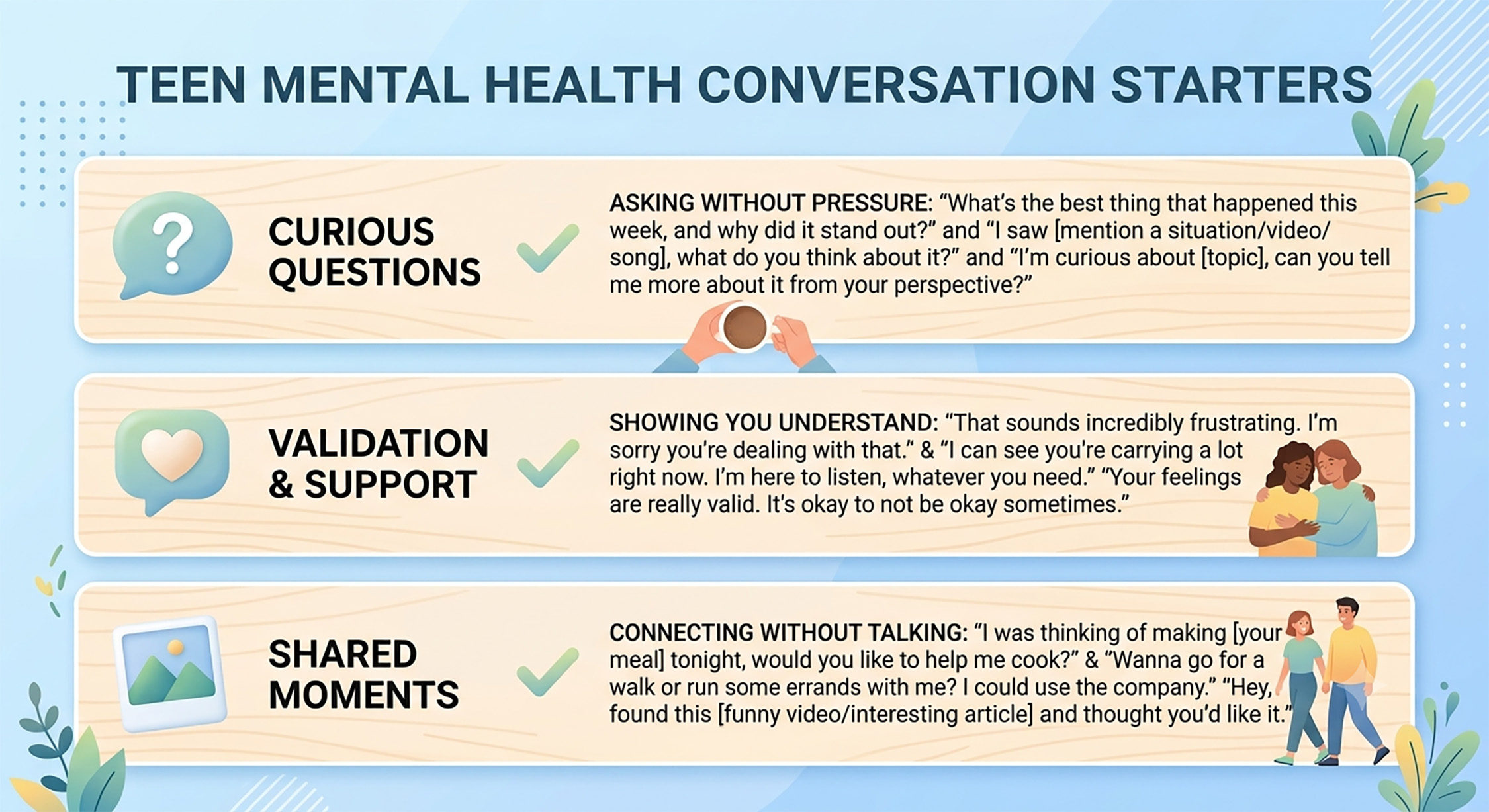
Immediate Crisis Resources and Professional Intervention
When a mental health emergency strikes, your priority is securing safety and clear direction. Knowing exactly when to step in with professional support can transform terrifying moments into actionable protection. Solidifying your resources now ensures your child receives the intensive clinical evaluation required during a mental health crisis.
A crisis occurs when your teen’s distress overwhelms their ability to cope, making it impossible to guarantee their physical or emotional safety at home. The following indicate the need for immediate professional guidance:
- Expressions of Self-Harm or Suicide: Any active statements, written notes, or clear signs of self-injury require an urgent emergency evaluation
- Severe Behavioral Changes: Sudden, extreme aggression, explosive panic, or a complete detachment from reality that puts themselves or others at risk
- Inability to Function: Refusing to eat, sleep, or communicate for consecutive days, or demonstrating total withdrawal from daily life
- Threats of Flight: Clear statements or attempts to run away from home, especially while in a highly unstable emotional state
BasePoint Academy’s clinical teams serve families across multiple welcoming Texas treatment centers, including in Arlington, Forney, Frisco, and McKinney. If your child is experiencing an urgent mental health situation, call 988, text HOME or HOLA to 741741, or contact the BasePoint Academy admissions team to map out the next steps for a comprehensive professional assessment.
FAQs About Communicating with Teens
Seeking clear answers during a challenging emotional season helps you feel grounded and prepared to protect your teenager’s well-being. Finding the line between normal development and a mental health disorder can be confusing. These straightforward answers give you the practical guidance you need to take your next steps with complete confidence.
How Do I Know if My Teen Is Just Being a “Typical Teenager” or if It’s a Mental Health Issue?
Adolescence brings natural mood shifts, but persistent changes that disrupt daily functioning point to a significant concern. If your child exhibits prolonged isolation, sharp academic drops, drastic sleep changes, or intense emotional outbursts lasting more than 2 weeks, these signs indicate an emotional burden requiring professional evaluation.
What Should I Do if My Teen Refuses to Talk to Me About Their Feelings?
Remove the pressure of a forced conversation by focusing on a comforting, low-pressure presence rather than demanding answers. You can invite connection through shared activities, like running simple errands together or a quiet drive. Reassure them that you’re ready to listen without judgment whenever they feel safe to share.
Furthermore, you can offer them the space to speak with an objective outside professional like those at BasePoint Academy—call (972) 357-1749 to speak with a compassionate specialist today.
Mentioning Mental Health Seems Scary; Will I Make Things Worse by Bringing It Up?
Addressing mental health directly doesn’t worsen the issue; instead, it provides immense relief by showing your child that their pain is seen and validated. Approaching the topic with calm curiosity gives your teenager permission to be vulnerable, breaking down the isolating stigma and opening a safe pathway toward vital therapeutic interventions.
How Can BasePoint Academy Help My Teen if They Are Struggling?
We deliver tailored adolescent outpatient treatment programs that blend evidence-based therapies with necessary academic stabilization. Our specialized programs include comprehensive partial hospitalization and flexible intensive outpatient support, ensuring your child receives substantial psychiatric and therapeutic intervention. Contact us for a no-pressure teen mental health assessment to identify the most suitable level of care.
Does BasePoint Academy Accept My Insurance for Teen Mental Health Services?
Yes, we coordinate directly with insurance providers to verify your specific plan benefits and simplify your teen’s path to mental health care. Our dedicated admissions experts handle the complex prior authorizations and coverage details on your behalf, offering a complimentary, comprehensive benefits check so you can focus entirely on your family’s healing.
Which BasePoint Academy Location Is Nearest to Me?
In addition to our welcoming, modern therapeutic settings across several convenient Texas communities, we also offer online mental health treatment programs:
Get Expert Support for Your Teen and Your Family
Our licensed clinicians provide comprehensive mental health assessments, personalized treatment recommendations, and evidence-based care to help teens and families move toward lasting healing. We’re also happy to verify your insurance benefits and discuss your treatment options.
Texas Youth Mental Health Statistics and Research
- According to Every Texan, more than 1.2 million young people report struggling with mental, emotional, behavioral, or developmental challenges. This striking statistic represents 20% of the entire youth population across Texas, highlighting a widespread need for dedicated therapeutic attention and family support.
- Data from NAMI reveals that 316,000 adolescents in Texas experience serious thoughts of suicide annually.
- Based on the 2025 State of Mental Health in America report by Mental Health America (MHA), Texas ranks 19th nationwide for youth mental health. This ranking evaluates both the occurrence of psychological conditions and the availability of treatment options for adolescents between the ages of 12 and 17.
- Data from the UTHealth Houston School of Public Health indicates that 1 in 6 young people experience a mental health disorder annually, a ratio that translates to roughly 7.7 million children each year nationwide.
- According to America’s Health Rankings, a two-year estimate using 2023–2024 data reveals that 17.1% of Texas children between the ages of 3 and 17 have been diagnosed with emotional or behavioral challenges. Specifically, this portion of youth was identified by a medical provider as currently having anxiety, depression, or ADHD, or flagged by a physician or educator for conduct and behavioral problems.