

Schizotypal Personality Disorder Treatment for Teens in Dallas, Texas
Teen Schizotypal Personality Disorder (STPD) is more than just an unusual state of mind. It is understudied, under-recognized, and challenging to treat. BasePoint Academy has several facilities in the Dallas area that offer mental health treatment for teens with various mental health conditions, including STPD, depression, anxiety, and bipolar disorder.
When you call BasePoint Academy or complete our online form, our admission specialist can schedule a confidential assessment. This evaluation allows us to make treatment recommendations so you can make informed decisions about your child’s care. Contact us today to learn more about our specialized schizotypal personality disorder treatment for teens in Dallas and how we can support your family today.
Learning About Schizotypal Personality Disorder in Teens
Teen Schizotypal Personality Disorder (STPD) is characterized by social discomfort, eccentric behaviors, and distorted thinking. Teenagers with STPD often struggle to form relationships and may display odd speech patterns or beliefs. Although it shares some similarities with schizophrenia, such as unusual perceptions or paranoia, STPD rarely progresses to schizophrenia.
Early intervention and counseling services can help your teen manage their symptoms and improve their social functioning. STPD treatment for teenagers typically takes place in a supportive environment and includes targeted interventions. Treatment often includes talk therapies like Cognitive-Behavioral Therapy (CBT) to help your teen develop healthier thought patterns. It may also involve social skills training to improve their interpersonal interactions.
Family support is essential in reducing isolation and creating a safe space in which your teen can grow. Early identification of STPD symptoms and a tailored treatment plan can significantly improve your teen’s quality of life. Each of these factors is significant to treatment. If your teen is showing signs of STPD, contact BasePoint today for a free evaluation and to explore our comprehensive treatment options.
Insurance Coverage for Teen Schizotypal Personality Disorder
During a confidential assessment with a licensed clinician, we will recommend the appropriate level of care for your teen struggling with schizotypal personality disorder. We can also check your insurance coverage.
Call (972) 357-1749 or complete our inquiry form to schedule a same-day assessment.






Teen Schizotypal Personality Disorder Treatment Admissions
Contact BasePoint Academy Today
Contact us today to schedule a confidential assessment for your teen with a licensed clinician.
You can also get in touch to talk with our mental health experts about treatment needs, care options and your insurance coverage levels.
Call: (972) 357-1749Check Your InsuranceWhat Are the Main Differences Between Adolescent Schizoid Personality Disorder, Social Anxiety, and STPD?
Adolescent schizoid personality disorder, social anxiety, and Schizotypal Personality Disorder (STPD) share social withdrawal traits but differ in underlying symptoms. Schizoid personality disorder is marked by emotional detachment and indifference to relationships. Teens with social anxiety experience intense fear of judgment in social situations. Those with STPD have a combination of social anxiety with eccentric thoughts and perceptions.
Schizoid personality disorder primarily features an inability or lack of desire to form close relationships, which makes teenagers seem emotionally cold and detached. However, teenagers with social anxiety have a fear of negative evaluation and thus avoid social situations. Symptoms of social anxiety may also be present in teens with schizotypal personality disorder, but this condition is distinguished by peculiar behavior, unusual beliefs, and cognitive distortions.
Schizotypal personality disorder symptoms, unlike those association with social anxiety, may also include paranoia and odd thinking patterns. While schizoid and schizotypal disorders involve persistent personality traits, social anxiety disorder is situational and typically improves with therapy. Understanding the differences is crucial for a proper diagnosis and appropriate treatment plan.
What Are the Underlying Causes of Schizotypal Personality Disorder in Teens?
Schizotypal personality disorder is believed to be caused by a combination of genetic, environmental, and neurological factors. For example, a family history of psychotic disorders can increase your child’s risk. Genetic predisposition plays a significant role; may inherit vulnerabilities that affect brain function.
Abnormalities in brain structure and function, particularly in areas like the prefrontal cortex and temporal lobes, have been linked to schizotypal personality disorder. These areas influence decision-making, social cognition, and emotional processing. Additionally, trauma, abuse, or neglect during the formative years can disrupt a teen’s ability to form healthy attachments and trust others. Recognizing these causes is critical for early STPD diagnosis and treatment, which can help your teenager manage their symptoms and improve their social functioning.
What Are Common Signs and Symptoms of Schizotypal Personality Disorder in Teens?
Early recognition and treatment are crucial to improving your teenager’s quality of life. Recognizing the symptoms of schizotypal personality disorder speeds diagnosis. Below is a list of just a few STPD symptoms to be aware of. Call BasePoint Academy today for more information and to get help for your teenager.
Lack of Close Personal Relationships
Teens with STPD typically struggle with forming and maintaining close relationships. Their social withdrawal, discomfort with interactions, and suspicions of others make intimacy difficult. Teens may feel disconnected and prefer isolation, which stems from fear of judgment and difficulty understanding social norms. This inability to engage in meaningful relationships can exacerbate loneliness and hinder their emotional growth.
Odd Behavior and/or Mannerisms
Teenagers with STPD typically have peculiar behaviors and mannerisms that set them apart. Their gestures, speech patterns, or dress can appear eccentric or unconventional. While the behaviors are often harmless, they may confuse and alienate others. Odd mannerisms typically reflect your teen’s way of interpreting the world, reinforcing their sense of being different.
Incorrect Interpretations That Situations Have Special Meaning
Teens with an STPD diagnosis may misinterpret ordinary events or interactions as having some hidden or special significance. This tendency leads them to assign personal meaning to unrelated events. For example, they may believe a casual comment is a secret message meant for them. These misinterpretations confuse them and reinforce feelings of paranoia.
Paranoia About Others’ Intentions
Paranoia is a common symptom that causes teenagers to distrust other people’s motives. They might believe others are out to harm or deceive them, even in benign situations. This pervasive suspicion can lead to strained relationships and increased social withdrawal and isolation. A heightened mistrust makes your teen defensive and prevents them from forming meaningful connections.
Unusual Perceptions or Magical Beliefs
Teenagers with schizotypal personality disorder may experience unusual perceptions or hold magical beliefs. A belief in telepathy, superstitions, or other phenomena without a logical basis can make them appear to have emotional instability. These are not delusions but reflect a distorted view of reality, making interactions with others confusing. These traits contribute to social difficulties and feelings of alienation.
Lack of Motivation at Work or School
If your teen has STPD, they may lack motivation at work or school because they have difficulty focusing. Disconnection from others and fear of judgment makes group settings daunting. Additionally, eccentric thinking patterns can hinder their ability to meet traditional expectations. This lack of drive can result in underachievement and missed opportunities, which reinforce feelings of inadequacy and social isolation.
Social Anxiety and Poor Relationship Skills
Social anxiety and poor relationship skills are a hallmark feature of SGTPD. The intense fear of being judged or rejected makes social interactions stressful for your adolescent. They may misinterpret social cues, which leads to awkward or inappropriate responses. The anxiety drives them to avoid social situations, which perpetuates the isolation.
How Common Is Teenage Schizotypal Personality Disorder in Dallas, Texas?
Because schizotypal personality disorder is not well studied, specific data among teenagers in Dallas, Texas, is not readily available. Nationally, prevalence may reach up to 4% of the population. However, local prevalence can vary because of socioeconomic status, access to mental health services, and cultural influences.
Early identification and intervention are crucial in managing STPD, especially during adolescence when personality traits are still developing. Awareness of the symptoms can aid in timely diagnosis and treatment, potentially improving long-term outcomes.
Types of Therapy and Treatment for Individuals with Schizotypal Personality Disorder in Dallas/Fort Worth, Texas

Treatment for schizotypal personality disorder through outpatient options like therapy or a partial hospitalization program can improve your adolescent’s quality of life. Teens with STPD rarely seek treatment on their own; their loved ones often refer them. Read on to learn more how about the therapies we offer at BasePoint Academy can help your adolescent.
Dialectical Behavior Therapy
Dialectical Behavior Therapy (DBT) helps teenagers with STPD manage intense emotions, reduce harmful behaviors, and improve interpersonal skills. It combines cognitive-behavioral techniques with mindfulness practices, addressing emotional regulation issues and social anxiety. DBT helps them recognize and challenge distorted thoughts while they build emotional resilience. Skills training in distress tolerance and interpersonal effectiveness empowers them to navigate relationships and challenges.
Mindfulness-Based Therapy
Mindfulness-based therapy teaches adolescents with STPD to become aware of their thoughts and feelings without judgment. It also reduces core STPD symptoms like anxiety, paranoia, and overreliance on distorted thinking. By focusing on the present moment, mindfulness therapy encourages emotional regulation, improved self-awareness, and changed behaviors. Over time, mindfulness-based therapy fosters healthier coping mechanisms and reduces social withdrawal.
Schema-Focused Therapy
Schema-focused therapy is effective at addressing the deep-rooted cognitive and emotional patterns that underlie STPD symptoms. These schemas often develop from trauma, abuse, or neglect in early life. They also perpetuate dysfunctional thoughts and behaviors. By identifying and restructuring the patterns, schema-focused therapy helps your adolescent improve their self-perception, positively influencing their relationships.
The therapy’s emphasis on emotional healing and self-reflection is particularly effective for addressing issues like social anxiety and eccentric thinking.
Family Therapy
Family therapy supports your teen and the whole family unit by improving communication and understanding. It helps your family recognize the STPD’s effects and equips you with the tools to foster a supportive environment. This type of therapy improves empathy and reduces conflict.
Family therapy for STPD allows your family members work together to address challenges. If your teen has this condition, family therapy can mitigate feelings of isolation and strengthen bonds in their relationships.
Mindfulness-Based Cognitive Therapy
Mindfulness-Based Cognitive Therapy (MBCT) is a type of psychotherapy or talk therapy that combines mindfulness practices with cognitive restructuring. This addresses distorted thinking patterns typical of schizotypal personality disorder. It teaches your teenager to observe and disengage from maladaptive thoughts, reducing their paranoia and emotional distress.
MBCT is beneficial for managing comorbid conditions like anxiety or depression by cultivating self-awareness and acceptance. Your child begins to feel more grounded, which improves their ability to navigate social situations.
Transference-Focused Psychotherapy
Transference-Focused Psychotherapy (TFP) is a psychoanalytic approach that explores the dynamics of personality disorders and relationships. By examining how past experiences have influenced present behaviors, your teen can come to understand and modify problematic interpersonal interactions. TFP addresses mistrust and distorted beliefs, fostering healthier relationships and emotional stability, and is particularly effective in teenagers with complex relational difficulties.
Support and Group Therapy
Treatment for teens with STPD in Dallas, Texas, typically includes support and group therapies. These provide a safe space for your adolescent to share their experiences and develop appropriate social skills. Group therapy settings encourage interaction and reduce social isolation, allowing your teenager practice their interpersonal techniques within a controlled environment.
Emotional support therapy offers validation and fosters a sense of belonging by primarily focusing on encouragement instead of delving into past traumas or unconscious conflicts. Support and group therapy can improve your teen’s confidence, reduce their anxiety, and help them recognize that they are not alone.
Cognitive-Behavioral Therapy
Cognitive-Behavioral Therapy (CBT) is a foundational therapy for personality disorders. It focuses on identifying and changing distorted thought patterns and behaviors. CBT helps your teenager challenge magical beliefs, paranoia, and eccentric thinking, all of which are typical symptoms of schizotypal personality disorder.
CBT emphasizes practical strategies for improving social skills and managing anxiety. It is a short-term, goal-focused therapy that helps restructure negative thought patterns so teenagers can gain greater control over their emotions and interactions. This improves overall functioning and your teenager’s quality of life.
Psychoanalytic or Psychodynamic Therapy
Psychoanalytic or psychodynamic therapy delves into the unconscious mind to discover deep-seated conflicts and emotional struggles and is typically trauma-informed. If your teenager has schizotypal personality disorder, this approach allows them to explore how early experiences influence their current thoughts and behaviors.
Fostering insight into these patterns helps your teen address the core issues of mistrust and emotional detachment. Long-term therapy promotes self-understanding and personal growth, so your teen can improve their relationships and mental health.
BasePoint Academy Accepts health Insurance
We accept most major health insurance providers in Texas and can check your treatment coverage levels on your behalf.
How to Find Therapy and Treatment Options for Schizotypal Personality Disorder in Dallas, Texas
BasePoint Academy provides schizotypal personality disorder treatment for teens at several facilities in the Dallas, Texas, area. Each of our centers is staffed by highly skilled and experienced clinicians and licensed mental health professionals. Call (972) 357-1749 to schedule a tour of your closest facility.
- Arlington, Texas: 3900 Arlington Highlands Blvd Suite 237, Arlington, TX 76018
- Forney, Texas: 713 W Broad St Suite 200, Forney, TX 75126
- Frisco, Texas: 8275 Judges Way #100i, Frisco, TX 75036
- McKinney, Texas: 4733 Medical Center Dr, McKinney, TX 75069
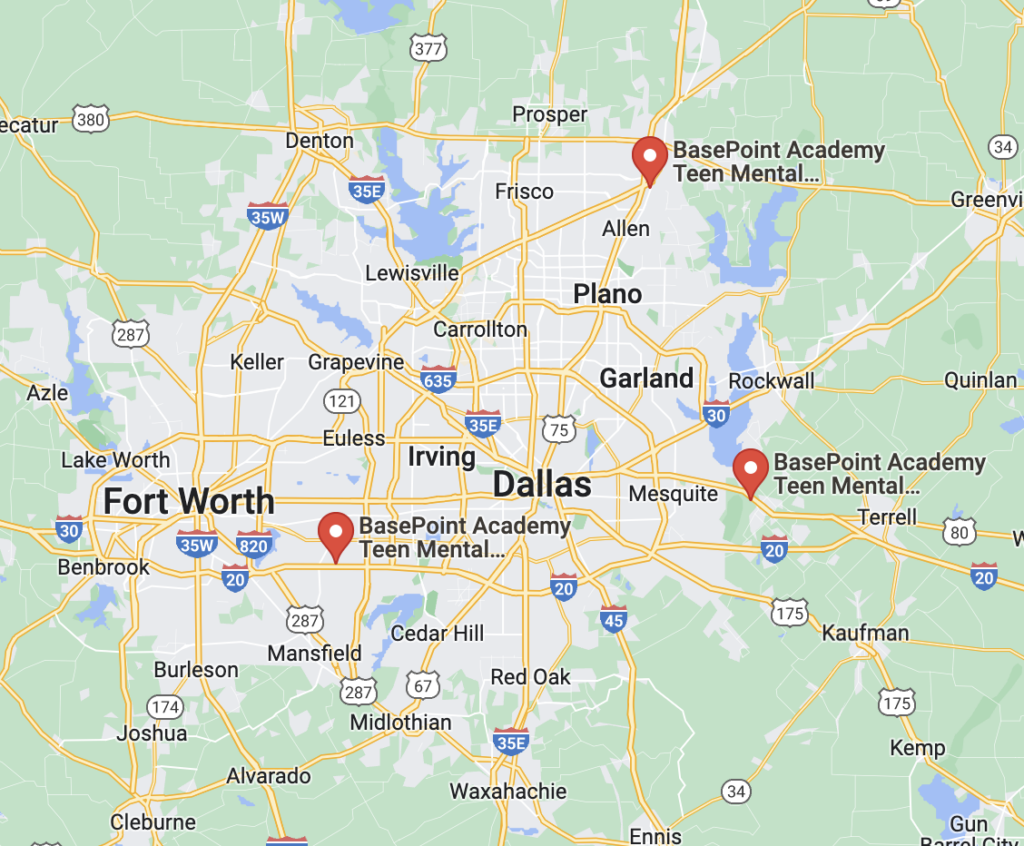
Schizotypal Treatment Program for Teens in Arlington, Texas
Arlington, Texas, is a business, education, and entertainment hub between Dallas and Fort Worth. The city is home to the University of Texas at Arlington, which hosts the NCAA Division 1 Western Athletic Conference for 15 varsity sports. The city is also home to the Dallas Cowboys and the Texas Rangers.
Arlington also boasts other popular attractions like Six Flags Over Texas and the AT&T stadium. The city is growing with a diverse economy, including contributions from Fortune 500 companies like American Airlines and General Motors.
- BasePoint Academy – Arlington, Texas: 3900 Arlington Highlands Blvd Suite 237, Arlington, TX 76018
Schizotypal Treatment Program for Teens in Forney, Texas
Forney, Texas, is a rapidly growing city in Kaufman County. The city is 20 miles east of Dallas and within the Dallas-Fort Worth metroplex. Forney is home to scenic parks and popular local events celebrating its rich history, and is often called the “Gateway to East Texas.”
Forney blends small-town charm with modern developments. The growing population, excellent schools, and proximity to Dallas add to its appeal.
- BasePoint Academy – Forney, Texas: 713 W Broad St Suite 200, Forney, TX 75126
Schizotypal Treatment Program for Teens in Frisco, Texas
Frisco, Texas, is a fast-growing city north of Dallas within the Dallas-Fort Worth metroplex. Known for its vibrant community, excellent schools, and family-oriented atmosphere, Frisco blends modern development with a welcoming, small-town feel. Attractions include Frisco Square, The Star, and numerous parks that promote recreation and connection.
With its strong focus on education, wellness, and youth support, Frisco provides an encouraging environment for families seeking compassionate care.
- BasePoint Academy – Frisco, Texas: 8275 Judges Way #100i, Frisco, Texas, 75036
Schizotypal Treatment Program for Teens in McKinney, Texas
McKinney, Texas, is a thriving city 30 miles north of Dallas. It’s known for its historic downtown area filled with charming shops and cultural attractions. McKinney blends a small-town feel with modern amenities and is one of the fastest-growing cities in the U.S.
The technology, healthcare, and retail industries support McKinney’s strong economy, making it a sought-after place to live and work.
- BasePoint Academy – McKinney, Texas: 4733 Medical Center Dr, McKinney, TX 75069
What Is the BasePoint Difference?

7am to 7pm CST
7 Days a Week

Full Time Physican
On Site

We Transport
To and From

Therapy Involving
the Whole Family

Family
Owned

Contact BasePoint Academy Today
Contact us today to schedule a confidential assessment for your teen with a licensed clinician.
You can also get in touch to talk with our mental health experts about treatment needs, care options and your insurance coverage levels.
Call: (972) 357-1749Check Your InsuranceDoes Private Health Insurance Provide Coverage for Schizotypal Personality Disorder Treatment in Dallas, TX?
Yes, private insurance providers like Aetna, Blue Cross Blue Shield, Cigna, and Carelon offer benefits for schizotypal personality disorder medication and treatment in Dallas, Texas. However, the coverage levels vary depending on your insurance policy and company regulations. Federal law mandates that insurance providers offer coverage for mental health care at the same level they cover medical and surgical care.
However, there are exceptions to these rules, and each insurance policy differs in its coverage specifics, such as the number of therapy sessions or the types of treatments it covers. Additionally, your out-of-pocket costs, like your including deductible, copay, and coinsurance, vary based on your plan and provider.
The admission specialists at BasePoint Academy can verify your insurance coverage and estimate your potential out-of-pocket expenses to help you plan your teen’s care. We also offer a confidential assessment and make treatment recommendations so you can make informed decisions.
How Much Does Schizotypal Personality Disorder Therapy and Treatment for Adolescents Cost Without Health Insurance Coverage?
If you do not have health insurance, the cost of treatment for your adolescent varies depending on several factors. Individual therapy sessions average $150 to $250, while more comprehensive programming, like PHPs, can cost $350 to $850 per week. The total cost depends on how long your teenager receives treatment and whether it is inpatient or outpatient.
Inpatient or residential treatment costs far more than outpatient treatment, such as day treatment programs. Call BasePoint Academy today to inquire about our treatment options for schizotypal personality disorder and any financial assistance you may qualify for. If your teenager does not have insurance, they may be eligible for Medicaid or scholarship-based programs. Our financial counselors will work with you and answer questions about how your teen can access treatment for STPD.
How Much Does Schizotypal Personality Disorder Therapy and Treatment for Adolescents Cost with Health Insurance Assistance?
The cost of individual outpatient therapy ranges from $150 to $250 per hour, while more intensive programs like PHPs cost $350 to $850 a week; however, most health insurance providers cover part or all of these costs. The type of therapy your teen receives, the therapist’s experience, and your policy details influence the amount you’ll ultimately pay.
Two federal laws mandate that insurance providers offer benefits for mental health care at the same level they cover medical and surgical care. However, there are exceptions to these rules, and BasePoint Academy can clarify your coverage. Contact us today for more information about our therapy options for your teen and to verify your insurance coverage.
Contact BasePoint Academy Today
Contact us today to schedule a confidential assessment for your teen with a licensed clinician.
You can also get in touch to talk with our mental health experts about treatment needs, care options and your insurance coverage levels.
Call: (972) 357-1749Check Your InsuranceWhat to Expect During the Admissions Process for Schizotypal Personality Disorder Treatment at BasePoint Academy
The admission process for schizotypal personality disorder treatment at BasePoint Academy is straightforward and allows us to get your teen into treatment as quickly as possible. We’ll develop a customized program to meet your teenager’s needs. The following steps ensure your adolescent gets proper treatment:
- Initial Phone Call: During your initial phone call, BasePoint can accomplish several steps in the admission process. We can answer many of your questions about treatment, verify your insurance coverage, estimate your out-of-pocket expenses, and schedule an initial confidential assessment that will allow us to make treatment recommendations.
- Insurance Verification: If your insurance coverage was not verified during the initial phone call, we will verify it before your teen is admitted to the program. This reduces the potential to receive a bill that surprises you. Our admission specialist will estimate your potential out-of-pocket costs and can connect you with financial counselors if your insurance policy does not include significant benefits for mental health treatment.
- Comprehensive Evaluation: Your teen will undergo a comprehensive evaluation that forms the foundation of their customized treatment program. A personalized plan ensures each aspect of their mental health is addressed.
- Admission Coordination and Orientation: Before your adolescent’s first day of treatment, we’ll ensure they know what they can and cannot bring to the center and work with you to ensure all documentation has been handled. On the first day, you and your teenager will receive an orientation to the facility and their customized treatment program.
- Progress Monitoring and Program Adjustment: Your teenager receives the most from their treatment when they actively participate. Throughout the program, we will monitor their progress and make adjustments to their customized plan as needed.
Confidential Teen Schizotypal Personality Disorder Assessment Near Me
BasePoint Academy offers a free and confidential schizotypal personality disorder assessment and recommends treatments to help you and your teenager make an informed decision about receiving care. The signs of STPD are not always easy to spot and can be mistaken for other mental health conditions. However, BasePoint’s experienced and skilled therapists can diagnose and treat your teen.
Depression, anxiety, and other mental health conditions may occur alongside STPD, requiring specialized dual diagnosis treatment. This type of care increases the potential for your teenager to experience success. Call (972) 357-1749 and request a confidential assessment to get help for your child today.

Contact BasePoint Academy Today
Has your teen exhibited schizotypal personality disorder symptoms? Contact BasePoint Academy for an assessment and treatment recommendations for your teen.
Statistics on Schizotypal Personality Disorder and Treatment in Teens in the Lonestar State
- The risk period for Schizotypal Personality Disorder (STPD) extends through age 40, with onset skewing early; over half of affected people developed the disorder before age 20, and approximately 1 in 7 showed onset before age 14, according to a study in the journal Neuropsychobiology.
- Depression and anxiety, which are common co-occurring mental health conditions with STPD, are also common in adolescents. In 2021, 22% of Texas students seriously considered attempting suicide within the past year, and 20% said they made a plan, according to Every Texan.
- Cognitive-Behavioral Therapy (CBT) is considered a first-line treatment for schizotypal personality disorder, with patients showing improvement in positive and negative functioning, and may also help prevent conversion to psychosis in schizoid spectrum disorders, according to information from Texas A&M University.
- According to a study in the Journal of Consulting and Clinical Psychology, schizotypal personality disorder remained relatively stable over time, with 61% of individuals dropping below the diagnostic threshold over 24 months, and 23% meeting a more stringent definition of improvement, suggesting that while symptom severity may fluctuate, the core traits of STPD tend to persist.
- Peer victimization has been identified as an environmental risk factor for the development of STPD in childhood and adolescence, according to Schizophrenia Bulletin Open, highlighting the important role that adverse social experiences during these formative years may play in the emergence of SPD-related traits.