
Clinical Support for Pathological Lying Disorder in Dallas-Fort Worth
A Texas Woman’s University review found that adults identified as pathological liars reported that excessive lying began during adolescence. BasePoint Academy understands the importance of early intervention and offers in-person and virtual pathological lying treatment in Texas. If your teen is struggling with chronic dishonesty, clinical intervention is the first step toward reclaiming the truth. Call us for a confidential assessment.
Specialized Mental Health Intervention at BasePoint Academy
BasePoint Academy’s mental health services involve identifying and treating complex behavioral patterns, including pathological lying, also known as mythomania. Our confidential clinical assessment of lying disorders begins with a thorough evaluation to determine underlying causes, whether trauma, impulse-control issues, co-occurring mood or neurodevelopmental conditions, learned behavior, or related issues.
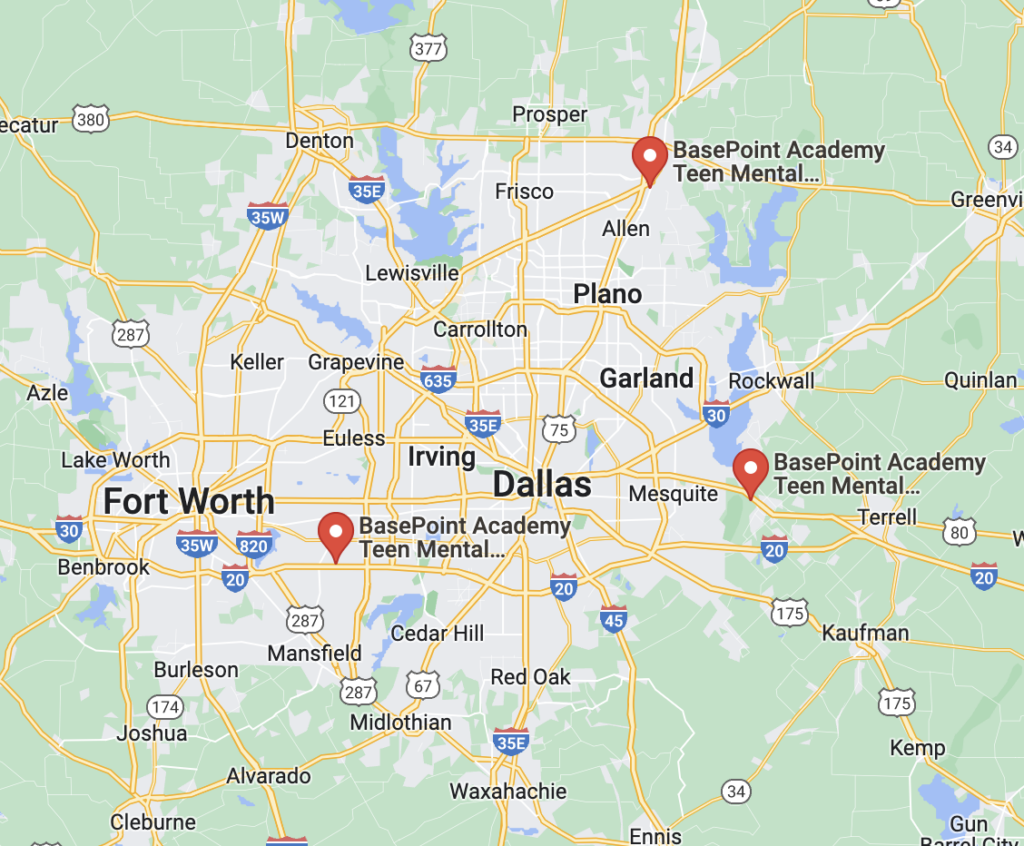
Overcoming compulsive lying requires more than willpower; it requires an accurate professional diagnosis and a tailored treatment plan. BasePoint Academy’s outpatient mental health interventions in the Dallas, Texas region involve evidence-based therapies and practical strategies to address compulsive lying and build honesty, trust, and overall well-being. With several convenient locations in Arlington, Forney, Frisco, and McKinney, we strive to make care accessible to families like yours. Are you ready to discover the underlying cause behind your teen’s behavioral patterns and take a decisive step toward lasting change? Contact us today.
Insurance Coverage for Mental Health Therapy
Our confidential assessment with a licensed clinician will recommend the appropriate level of care for your teen struggling with mental health. We can also check your insurance coverage levels.
Call us today to schedule a same-day assessment at (972) 357-1749 or complete our inquiry form.






Teen Mental Health Treatment Admissions
Understanding the Impact of Pathological Lying
Living with compulsive deception exacts a heavy psychological toll. Maintaining false narratives drains emotional energy, erodes self-esteem, and creates constant anxiety about being discovered. Families and friendships often feel betrayed and unsure of whom to trust, while academics and social connections suffer as inconsistencies accumulate. Coping with pathological lying can feel isolating for both your teen and your family.
Compulsive lying is not a standalone DSM-5 diagnosis; experts typically view it as a symptom of other conditions (e.g., antisocial, narcissistic, or borderline personality disorders). At BasePoint Academy, we work to identify underlying contributors and help bridge the gap between deception and honest communication through tailored therapeutic strategies. We can assess your teen’s pathological lying disorder symptoms, which may involve one or more of the following:
- Frequent, elaborate, or fantastical stories that seem driven by an internal impulse
- Little or no clear external motive (not just avoiding consequences or gaining advantage)
- Convincing delivery and sometimes apparent belief in their own fabrications
- Difficulty admitting lies or chronic secrecy and deception
- Escalation in frequency or complexity of falsehoods over time
- Relationship, school, or legal problems stemming from dishonesty
- Co-occurring signs of anxiety, mood disturbance, trauma, or neurodevelopmental issues
Identifying the Patterns of (Pathological) Compulsive Lying
If your teen repeatedly tells elaborate, dramatic, or fantastical stories that seem disconnected from reality and appear driven more by an inner compulsion than by clear reasoning (like avoiding trouble or gaining something), this pattern may be what’s sometimes clinically known as pseudologia fantastica.
You may notice the lies are detailed, emotionally engaging, and told with confidence, which can make it hard to separate truth from fiction. These patterns often leave you feeling confused, betrayed, and worried about your child’s well-being. Compulsive lying is not simply ordinary teenage dishonesty or attention-seeking; it involves a persistent tendency to create and maintain intricate false narratives. The stories can escalate in frequency and complexity over time and may pull family members into elaborate deceptions. Your teen might appear to believe parts of their own stories, alternate between truth and fiction, or show little obvious external motive for lying — that internal drive is a hallmark of the pattern.
This behavior often co-occurs with other mental-health challenges such as anxiety, mood disorders, personality traits, trauma-related issues, or neurodevelopmental conditions. Understanding the broader context is essential. Compulsive lying can be a symptom of underlying distress, unmet needs, or coping skills gone awry rather than simple willful misbehavior. A careful clinical assessment can help distinguish pseudologia fantastica from occasional lies, identify any co-occurring conditions, and determine whether targeted therapeutic interventions (psychotherapy, trauma work, family therapy, or treatment for mood/anxiety disorders) are needed.
You don’t have to navigate this alone. If you’re concerned, a BasePoint Academy clinician is here to support you and your teen, provide a respectful, non-blaming evaluation, and recommend a plan that supports honesty, accountability, and emotional growth. Seeking help early can reduce stress for your family and give your teen the tools to build healthier ways of relating and coping. Call us to schedule your teen’s confidential mental health assessment today.
Contact BasePoint Academy Today
Contact us today to schedule a confidential assessment for your teen with a licensed clinician.
You can also get in touch to talk with our mental health experts about treatment needs, care options and your insurance coverage levels.
Call: (972) 357-1749Check Your InsuranceInsurance and Cost of Treatment at BasePoint Academy
To confirm insurance coverage and benefits for BasePoint Academy mental health services, please call us for a prompt benefits check. Our intake team will verify your plan, explain what’s covered, and outline any prior authorization steps. We assist families in navigating coverage options and can help you understand likely out-of-pocket costs in minutes.
Insurance details will vary from one plan to the next, and it’s essential to have a thorough understanding of your policy’s terms and conditions before enrolling your teen in treatment. At BasePoint, we’re committed to transparency, so you can rest assured we’ll ensure you understand the fine print and provide the best estimate of treatment costs. Call or use our convenient contact form today.

BasePoint Academy Accepts health Insurance
We accept most major health insurance providers in Texas and can check your treatment coverage levels on your behalf.
Why Choose BasePoint Academy for Behavioral Recovery?
BasePoint Academy offers person-first, evidence-based care delivered with empathy and respect, creating a safe, non-judgmental environment where recovery is possible. Our intake begins with a confidential clinical assessment that listens to your teen’s story, identifies strengths and needs, and shapes a tailored treatment plan grounded in best-practice therapies.
We prioritize partnership, working with you, your child, and your support network to set realistic goals, celebrate progress, and build sustainable skills for long-term behavioral recovery. Seeking care shouldn’t be harder than the challenges you’re facing. With that in mind, BasePoint Academy makes access simple: insurance verification is available by phone, and our team will help you understand options and next steps. For specifics on treatment modalities, program structure, or accreditation, please call us to speak with a caring representative and see if BasePoint Academy is the right fit for your teen.
- Arlington, Texas: 3900 Arlington Highlands Blvd Suite 237, Arlington, TX 76018
- Forney, Texas: 713 W Broad St Suite 200, Forney, TX 75126
- Frisco, Texas: 8275 Judges Way #100i, Frisco, TX 75036
- McKinney, Texas: 4733 Medical Center Dr, McKinney, TX 75069
Additional Ways to Locate DPDR Treatment Centers for Teens in Dallas, Texas
Finding the right care for your teen can feel overwhelming, but there are clear steps you can take to connect with programs that specialize in Depersonalization-Derealization Disorder (DPDR). Dallas has a range of resources and knowing where to start can make the process more manageable for you and your family.
- Step 1: Use trusted online mental health directories to search for teen-specific DPDR treatment centers in Dallas, Texas. You can also use Google to enter specific key terms like “Teen trauma and DPDR treatment near me” or “Teen anxiety and DPDR treatment in Texas.”
- Step 2: Call your health insurance provider to confirm which facilities are in-network and ask about coverage for therapies for dissociation.
- Step 3: Speak with your teen’s primary care physician or school counselor for local referrals to treatment programs.
- Step 4: Reach out to community mental health organizations and support groups in Dallas that often keep updated lists of teen treatment options.
- Step 5: Explore hospital systems and adolescent-focused clinics in the Dallas area, as many offer specialized care for trauma-related dissociation and DPDR.
What Is the BasePoint Difference?

7am to 7pm CST
7 Days a Week

Full Time Physican
On Site

We Transport
To and From

Therapy Involving
the Whole Family

Family
Owned

Contact BasePoint Academy Today
Contact us today to schedule a confidential assessment for your teen with a licensed clinician.
You can also get in touch to talk with our mental health experts about treatment needs, care options and your insurance coverage levels.
Call: (972) 357-1749Check Your InsuranceFAQs About (Pathological) Compulsive Lying Disorder
Compulsive lying disorder can be confusing and painful; these FAQs offer brief guidance to help you recognize patterns, understand possible causes, and consider next steps. If you need personalized advice or an insurance benefits verification for BasePoint Academy’s Texas locations, call (972) 357-1749 now.
How Do I Know if My Teen Is a Pathological Liar?
Look for frequent, elaborate falsehoods driven by an internal urge rather than clear external gain, plus escalating frequency and significant life consequences; a clinical assessment is needed to confirm an existing pattern.
What Are the Common Psychological Causes of Chronic Lying?
Chronic lying often co-occurs with anxiety, trauma, mood disorders, personality traits, or neurodevelopmental conditions that drive maladaptive coping.
Can Compulsive Lying Disorder Be Treated With Therapy?
Yes. Targeted, evidence-based therapies and family-focused interventions can reduce deceptive behavior and address underlying causes of compulsive lying.

How Is Pathological Lying Different From Occasional “White Lies”?
Occasional white lies are situational and goal-directed, while pathological lying is persistent, internally driven, and causes functional impairment.
What Should I Do if My Teen Refuses to Acknowledge Their Lying?
Stay calm, avoid shaming, set clear boundaries and consistent consequences, and keep a factual record of incidents to share with a clinician. If lying is frequent or harmful, we offer a confidential evaluation to identify the causes and develop a treatment plan—call BasePoint Academy at (972) 357-1749 for guidance.
Is Treatment for Compulsive Lying Covered by Insurance at Your Texas Locations?
Coverage varies by plan. BasePoint Academy willingly provides a benefits check and quick estimate of likely out-of-pocket treatment costs.
Contact BasePoint Academy Today!
Does your teen have signs or symptoms of compulsive lying disorder? If you are concerned about your teenager’s mental health, contact BasePoint Academy for an assessment and treatment recommendations for your teen.
Sources
- World Health Organization. (n.d.). Mental health of adolescents. World Health Organization. Retrieved from https://www.who.int/news-room/fact-sheets/detail/adolescent-mental-health on July 11, 2023
- Horowitz, J. M. (2019, February 20). Most U.S. teens see anxiety and depression as a major problem among their peers. Pew Research Center’s Social & Demographic Trends Project. Retrieved from https://www.pewresearch.org/social-trends/2019/02/20/most-u-s-teens-see-anxiety-and-depression-as-a-major-problem-among-their-peers/ on July 11, 2023
Statistics and Resources on Compulsive Lying Disorder
- A recent study at two Texas institutions found that pathological lying in teens is linked to deficits in executive function.
- A study in Psychiatric Research and Clinical Practice reported that adults identified as pathological liars often trace the onset of their excessive lying back to adolescence.
- The National Library of Medicine notes that research on Pseudologia Fantastica (PF) yields mixed results on gender prevalence; some studies report equal rates between genders, while others find PF more common in males.
- A study of psychotherapists in the American Journal of Psychotherapy found that many clinicians regularly encounter and can reliably identify pathological lying. They believe it should be officially recognized as a distinct issue. Most therapists in the study recommended Cognitive Behavioral Therapy (CBT) as a key part of treatment.
- A Journal of Adolescence study found that while most teens naturally reduce lying as they grow, prolific liars may not follow that pattern and can continue or increase deceptive behavior. The researchers also noted that certain traits can help identify youths at higher risk for persistent, atypical lying.