
Teen Anger Intensive Outpatient Program (IOP) in Dallas, Texas
At BasePoint Academy’s multiple mental health treatment centers in the Dallas-Fort Worth Metroplex, we offer flexible day, evening, and virtual programs, including IOP anger management therapy. Our focus on adolescent development and psychology helps teens learn essential skills such as conflict resolution and emotional regulation.
We accept insurance for our comprehensive intensive outpatient services, which we’ve highlighted on this page. Continue reading or call now to discover more about our top-tier mental health IOP therapy options. Find out how BasePoint’s structured outpatient care can support your teen in healthy emotional expression and temper control.
Intensive Outpatient Programs for Anger at BasePoint Academy
At BasePoint Academy, our Intensive Outpatient Program (IOP) for anger provides teens with structured support that fits into their daily school and home routines. Through multiple weekly sessions, adolescents receive therapist-led group skills training, individual counseling, and family participation that helps reinforce progress at home.
Our IOP focuses on helping teens build healthy emotional regulation, reduce impulsive reactions, and develop stronger communication and conflict-resolution skills. The program is designed for teens who need more support than weekly therapy can provide but do not require full-day or inpatient hospitalization. Care is coordinated with schools, families, and outpatient providers to ensure consistent progress and stability.
Insurance Coverage for Anger IOPs
Our confidential assessment with a licensed clinician will recommend the appropriate level of care for your teen struggling with stress management and anger. We can also check your insurance coverage levels.
Call us today to schedule a same-day assessment at (972) 357-1749 or complete our inquiry form.





Teen Anger IOP
Admissions
Types of Anger Disorders Treated in Our Dallas IOP Program
BasePoint Academy’s teen anger IOP treatment in Dallas, Texas, offers targeted therapy for various presentations of anger. Behavioral health treatment programs like IOPs help teens understand and manage their emotions in healthier ways. The following are common types of anger disorders, but not an exhaustive list. We address teens’ unique mental health needs through personalized care. Contact us today.
General Anger Issues in Teens
During adolescence, many teens grapple with pervasive anger dysregulation that can unsettle daily routines and strain interpersonal bonds. Engaging in IOP therapy creates a nurturing space where young individuals can confront these emotional upheavals, acquire adaptive coping strategies, and explore more constructive modes of emotional expression.
Intermittent Explosive Disorder (IED)
IED is marked by startling, volatile bursts of fury and impulsive eruptions that eclipse the provoking circumstances. An immersive intensive outpatient program combines behavioral modification, emotional self-control techniques, and consistent support to diminish both the frequency and intensity of these outbursts. Mindful anger management is a vital tool for empowering teens with stress management skills.
Oppositional Defiant Disorder (ODD)
ODD manifests through recurrent oppositional, defiant, and antagonistic behaviors toward authority figures. Targeted IOP interventions incorporate psychotherapy and behavioral strategies that foster insight, shift mindsets, and nurture more cooperative, respectful interactions. This disciplined, mindful approach to anger control is crucial for breaking patterns of defiance and encouraging positive behavioral change.
Disruptive Mood Dysregulation Disorder (DMDD)
DMDD presents as relentless irritability, emotional volatility, and frequent temper tantrums that impair functioning. A specialized IOP anger therapy program with a focus on mood stabilization, emotional regulation, and addressing underlying mental health issues provides tailored treatment. These comprehensive psychiatric treatment programs aim to help teens redirect their emotional responses and improve their overall well-being.
Differences Between Anger Management PHPs and IOPs in Dallas
Partial Hospitalization Programs (PHPs) for anger management treatment deliver a higher level of care than IOPs. They involve full-day treatment, more frequent clinical contact, and multidisciplinary services for teens with pronounced anger dysregulation. IOP anger treatment in Dallas, Texas, offers a step-down or less restrictive alternative. Think regular group and individual therapy sessions scheduled around school or family obligations so adolescents can maintain routines.
PHPs can include daily skills training, psychiatry, medication management, and intensive family work; Anger-focused IOPs focus on weekly core sessions, stress management, relapse prevention, and reintegration. Duration of treatment, session frequency, and insurance authorization also vary, making PHPs suited to acute needs and IOPs better for ongoing maintenance and transition.

Does Health Insurance Cover Intensive Outpatient Programs for Anger Treatment in Dallas?
Insurance coverage for teen IOP anger treatment in Dallas, Texas, depends on your insurance company and specific plan. Many plans will pay for part of an intensive outpatient program if a doctor says it’s medically necessary. Always check your benefits before you enroll so you know what costs you may be responsible for.
BasePoint Academy can review your insurance benefits and help with any prior authorization paperwork. We also offer a mental health assessment to see what IOP support services are most suitable for your teen’s needs. Our expert clinicians can recommend the proper anger management therapy. Contact us today.
Counseling Options for Teen Anger Therapy in Our Dallas IOP Program

Our teen anger IOP in Dallas provides a range of evidence-based interventions. IOP counseling services are tailored for adolescents struggling with anger and emotional dysregulation. The comprehensive mental health treatment at BasePoint Academy builds coping skills, improves relationships, and supports academic functioning. The following provides a general overview of treatment options available to your teen, but there are others.
Individual Therapy
Individual therapy offers one-on-one sessions where a clinician tailors interventions to your teen’s specific triggers, history, and strengths. This focused work builds insight, develops personalized coping strategies, and sets measurable goals for emotion regulation and behavioral change. Therapists use assessment-driven approaches, such as skill coaching, motivational techniques, and progress monitoring, to help adolescents practice new responses in real-world situations.
Dialectical Behavior Therapy (DBT)
DBT teaches practical skills for tolerating distress, regulating intense emotions, and improving interpersonal effectiveness. Skills training groups and individual coaching help teens apply distress tolerance and emotion regulation strategies when anger flares. The DBT framework emphasizes validation alongside change. It reduces impulsive reactions while building a life worth living through structured skills practice.
Cognitive-Behavioral Therapy (CBT)
CBT identifies and modifies unhelpful thoughts and behaviors that fuel anger. Techniques include thought reframing to challenge distorted beliefs and behavioral experiments to test new responses in triggering situations. Therapists also teach grounding techniques and other coping skills to interrupt escalation, reduce physiological arousal, and restore cognitive control during moments of intense anger.
Experiential Therapy for Anger Management
Experiential approaches engage teens in active, somatic, or creative exercises. This may involve elements of role-play, movement, art, or simulated conflict to externalize and process anger safely. These modalities promote embodied learning and faster integration of adaptive responses. Mindfulness meditation is often integrated to increase present-moment awareness, reduce reactivity, and teach teens how to observe impulses without acting on them.
Psychodynamic Therapy Techniques
Psychodynamic techniques explore underlying patterns, attachment dynamics, and unconscious drivers of anger. Through reflective dialogue, your teen can uncover how past experiences shape present responses and learn to rework entrenched relational scripts. This deeper exploration complements skills-based work by addressing emotional meanings and long-standing internal conflicts that perpetuate anger cycles.
Group Therapy for Teenage Anger Issues
Group therapy provides a corrective social microcosm where teens practice communication, receive peer feedback, and learn that others face similar struggles. Facilitated groups focus on skill rehearsal, perspective-taking, and accountability. Members benefit from modeling, social problem-solving, and structured exposure to interpersonal triggers in a supervised setting, accelerating skill acquisition.
Family Therapy for Teen Anger
Family therapy engages caregivers and teens to shift interaction patterns that maintain anger and conflict. Sessions prioritize reorganizing routines, setting clear boundaries, and co-creating consistent behavior plans. Therapists teach active listening and empathy-building techniques so your family members can de-escalate conflict, validate emotions, and support healthier emotional expression at home.
Which Insurance Providers Cover Anger Management Intensive Outpatient Programs for Teens?
Many major insurers often cover teen anger management IOPs when clinicians document medical necessity. Common carriers include Blue Cross Blue Shield of Texas, Aetna, Cigna, UnitedHealthcare, and Humana, as well as regional plans and Medicaid/CHIP for eligible families. Coverage rules and copays ebb and flow by plan, so don’t assume uniform benefits.
BasePoint Academy can act as your navigator through the benefits labyrinth. We’ll check your eligibility, clarify out-of-pocket expenses, and initiate any needed prior authorizations. We’ll translate insurer speak into plain terms and help map coverage options so you can focus on your teen’s care rather than paperwork.
BasePoint Academy Accepts health Insurance
We accept most major health insurance providers in Texas and can check your treatment coverage levels on your behalf.
Teen and Adolescent Anger Management Intensive Outpatient Program in Dallas, Texas
BasePoint Academy provides trusted Intensive Outpatient Programs (IOPs) for teens and adolescents across Texas, offering holistic support and practical skills training. Our accredited IOPs deliver culturally attuned, person-centered care tailored to your teen’s unique needs. Call (972) 357-1749 or use our contact form to learn more about our comprehensive psychiatric treatment programs, verify insurance, and schedule a confidential assessment.
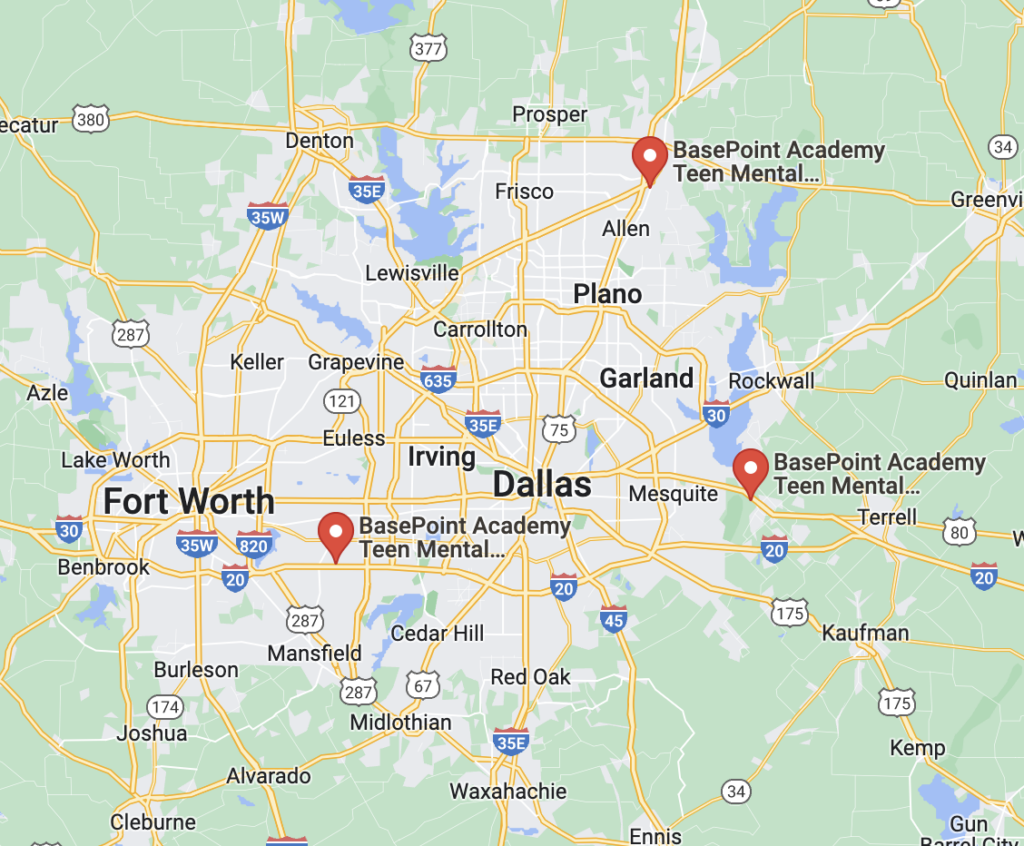
- Arlington, Texas: 3900 Arlington Highlands Blvd, Suite 237, Arlington, TX 76018
- Forney, Texas: 713 W Broad St, Suite 200, Forney, TX 75126
- Frisco, Texas: 8275 Judges Way, Suite 100I, Frisco, TX 75036
- McKinney, Texas: 4733 Medical Center Drive, McKinney, TX 75069
How to Find an Anger-Focused IOP for Teens in Dallas, Texas
If your teen is wrestling with anger, choosing the right treatment setting can spark meaningful recovery for the whole family. Below is a straightforward guide to help you find a recovery-focused IOP or similar treatment program nearby:
- Search online with terms like “dual diagnosis IOP program for teens near me” or “IOP anger management for teens in Dallas, Texas” to locate local adolescent-centric services.
- Prioritize evidence-based programs that use individualized and holistic approaches. Therapies grounded in research and tailored to your teen’s particular needs result in the most successful outcomes.
- Verify the program’s accreditation to confirm it meets recognized standards of care.
- Weigh convenience, as a nearby program eases attendance and promotes family involvement in treatment.
- Read parent and teen reviews to gauge staff expertise, program culture, and real-world outcomes.
- Call programs directly to ask about services, session schedules, and insurance. Many centers, including BasePoint Academy, offer free consultations to help you decide.
What Is the BasePoint Difference?

7am to 7pm CST
7 Days a Week

Full Time Physican
On Site

We Transport
To and From

Therapy Involving
the Whole Family

Family
Owned

Free and Confidential Anger Assessments for IOP Admissions in Dallas
BasePoint Academy offers free, confidential anger assessments to determine if an Intensive Outpatient Program (IOP) is the right fit for your teen. These evaluations are conducted by experienced clinicians who assess mood, behavior, and risk factors to create a clear clinical picture and recommend appropriate next steps.
If you’d like an assessment, call BasePoint Academy at (972) 357-1749 to schedule one. We’ll provide the kind of guidance that delivers peace of mind, answer questions, and keep all information private and secure as we evaluate your teen’s needs and treatment options.

What Is the Admissions Process for Teenage Anger IOPs in Dallas?
The admissions process for teenage anger Intensive Outpatient Programs (IOPs) in Dallas, Texas, is supportive and family-centered. At BasePoint, we tailor care to your teen and guide you through each step with compassion and clarity. Below is a general overview of what you can expect, from admissions to actual treatment; individual experiences may vary.
- Initial contact: Call or use our contact page to begin; we’ll listen, answer questions, and welcome you with compassionate guidance.
- Assessment: We provide a complimentary, thorough evaluation to pinpoint your teen’s emotional and behavioral needs and shape an individualized treatment plan.
- Insurance & coverage: We verify benefits and explain what’s covered so finances are transparent and manageable.
- Treatment plan: A personalized roadmap is created based on the assessment, outlining goals and recommended anger management interventions.
- Admissions coordination: We handle scheduling and paperwork to ensure a smooth, organized transition into care.
- Orientation: You and your teen meet staff, peers, and the program structure to ease anxiety and build engagement.
- Active treatment: Teens participate in evidence-based anger management therapies, groups, and skills practice to build healthier coping skills that contribute to emotional regulation.
- Monitoring & adjustment: Progress is tracked regularly, and treatment plans are refined as needed to support sustained growth and well-being.
How Much Does a Teen Anger Management Intensive Outpatient Program Cost with Health Insurance?
With health insurance, the cost of a teen anger management Intensive Outpatient Program (IOP) typically involves copays, coinsurance, and any deductible — many families pay only a portion of the total cost if the plan authorizes medically necessary treatment. Exact out-of-pocket expenses vary by insurer, plan benefits, and service frequency.
To get a precise estimate, contact BasePoint Academy for a benefits review and insurance verification. We can check your teen’s coverage, explain expected copays or coinsurance, assist with prior authorizations, and provide a clearer picture of any remaining fees so you can plan confidently.

How Much Does a Teen Anger Management Intensive Outpatient Program Cost Without Health Insurance Coverage?
With health insurance, the cost of a teen anger management Intensive Outpatient Program (IOP) typically involves copays, coinsurance, and/or any remaining deductible. Many families pay only a portion of the total cost when the plan authorizes medically necessary treatment. Exact out-of-pocket expenses vary by insurer, plan benefits, and service frequency.
To get a precise estimate, contact BasePoint Academy for a benefits review and insurance verification. We can check your insurance coverage, explain expected out-of-pocket expenses, assist with prior authorizations, and provide a clearer picture of any remaining fees.
Reasons to Enroll My Teen Child in an Anger Management Treatment IOP
Enrolling your teen in an anger management IOP can be a turning point – one that sparks clearer communication, steadier moods, and healthier relationships. In a focused, nurturing setting, teens learn practical tools to channel frustration constructively and step into a calmer, more confident version of themselves. Here are just a few reasons to consider this positive move:
- Personalized care: Individualized plans crafted to your teen’s specific profile and goals.
- Structured support: Predictable routines and targeted sessions that reinforce emotional balance.
- Expert guidance: Compassionate clinicians who champion adolescent growth and skill-building.
- Family partnership: Education and coaching to mend patterns, boost understanding, and strengthen connections.
- Enduring skills: Practical strategies that help your teen manage conflict calmly and carry resilience into adulthood.
Take the next step. Small actions now can unlock significant, lasting change for your teen and your family.
Contact the BasePoint Academy Today!
Does your teen have stress management and anger signs or symptoms? Contact BasePoint Academy to discuss a treatment plan for your teen.
Sources
- World Health Organization. (n.d.). Mental health of adolescents. World Health Organization. Retrieved from https://www.who.int/news-room/fact-sheets/detail/adolescent-mental-health on July 11, 2023
- Horowitz, J. M. (2019, February 20). Most U.S. teens see anxiety and depression as a major problem among their peers. Pew Research Center’s Social & Demographic Trends Project. Retrieved from https://www.pewresearch.org/social-trends/2019/02/20/most-u-s-teens-see-anxiety-and-depression-as-a-major-problem-among-their-peers/ on July 11, 2023
Statistics and Info on Teenage Anger Treatment for Families in Dallas, Texas
- A randomized controlled trial from 2018 found that anger management education significantly raised adolescents’ self-esteem and lowered measures of anger symptoms, triggers, hostile cognitions, interpersonal reactivity, and maladaptive anger behaviors—evidence that targeted education can reshape how teens experience and express anger.
- When young people learn to recognize and regulate hostility and anger, they’re more likely to choose constructive responses and less likely to engage in harmful or destructive acts.
- Research in the Journal of Education and Health Promotion reported that a structured anger management program lowered adolescents’ anger while boosting problem-solving, communication, and adaptability in school settings.
- A 2025 Clinical Child Psychology and Psychiatry paper showed that both Cognitive-Behavioral Therapy-based and personal development anger management groups produced meaningful gains in teens’ coping skills and self-worth versus control groups; outcomes were moderated by age, motivation, and treatment engagement, underscoring the value of individualized approaches.
- A 2024 meta-analysis found that anger is the most stubborn of negative emotions to control. Techniques that dampen physiological arousal, such as deep breathing, meditation, and yoga, consistently reduce anger. Contrary to popular belief, venting doesn’t reliably alleviate anger, and aerobic exercise like running, while beneficial for fitness and cardiovascular health, is not a guaranteed anger management strategy.