
Cost of Online Teen Mental Health PHP in Texas
BasePoint Academy’s licensed and compassionate professionals have an in-depth understanding of the mental health of Texas youth. We address conditions like depression, bipolar disorder, anxiety, OCD, PTSD, ADHD, and much more, through comprehensive treatment programs, including our esteemed online Partial Hospitalization Program (PHP).
Our digital mental health services reach even the most remote corners of Texas, eliminating barriers to the care your teen needs. We’re also proud to accept a diverse range of insurance plans and their corresponding carriers to reduce online treatment costs. This page highlights the costs of an online partial hospitalization program and the benefits of this level of remote emotional support.
What Is an Online Teen PHP?
An online teen PHP is a Partial Hospitalization Program delivered virtually for adolescents who need intensive, structured mental health care. It provides daily remote, outpatient psychotherapy, psychiatric evaluation, medication management, and skills groups via secure video and digital tools. This alternative to inpatient care allows teens to remain in their home environment.
These programs typically run several hours a day, 4 to 6 days a week, for multiple weeks. Depending on your teen’s needs, treatment plans often involve family psychoeducational sessions and coordination with schools. They suit teens experiencing moderate to severe depression, anxiety, self-harm, or other behavioral crises who require intensive support but not 24-hour hospitalization.
To determine the ideal level of care for your teen’s needs, call BasePoint Academy at (972) 357-1749 today. We offer a mental health assessment to evaluate symptoms, history, and immediate needs, then recommend the most appropriate interventions. This valuable service is an incredibly beneficial step toward making informed decisions regarding your teen’s mental health treatment.
BasePoint Accepts Teen Online Mental Health Treatment Coverage
Our online mental health assessment with a licensed clinician will recommend the appropriate PHP for your teen struggling with mental health issues. We can also estimate the cost of online therapy after reviewing your coverage levels.
Call us today at (972) 357-1749 to schedule a complimentary same-day assessment or complete our inquiry form.






Teen Online Mental Health Therapy Cost Inquiries
Contact BasePoint Academy Today
Contact us today to schedule a confidential assessment for your teen with a licensed clinician.
You can also get in touch to talk with our mental health experts about treatment needs, care options and your insurance coverage levels.
Call: (972) 357-1749Check Your InsuranceTeen Mental Health Statistics and Information in Texas
The Global Online Therapy and Counseling for Teens market is rapidly expanding, projected to grow from $1.66 billion in 2025 to $4.81 billion by 2032. This surge is fueled by heightened awareness of teen mental health and increased acceptance of digital mental health services. Meanwhile, the Texas Child Mental Health Care Consortium is actively assessing children’s needs across Texas.
In addition, research supports the effectiveness of online interventions in improving mental health outcomes for youth. Studies indicate that digital mental health programs and collaborative care can significantly benefit those facing self-injurious thoughts and behaviors.
While adolescents are more connected than ever through social media, they also report rising levels of depression and anxiety. A 2026 review suggests that young people, despite being the group with the highest prevalence of mental health issues, are often reluctant to seek traditional treatments. Online peer support has been found to potentially provide a necessary supplemental strategy to enhance youth mental health. As the landscape of online mental health treatment evolves, it carries the potential to bridge the gap in service access and improve the overall well-being of Texas youth.
Average Cost of Online PHPs in Texas
Online PHP costs in Texas vary widely based on provider, services, and other factors. With insurance, families often pay from $0 up to about $1,500 per week (copays, coinsurance, deductibles, or out-of-pocket maximums may apply). Without insurance, typical out-of-pocket costs are roughly $2,000 to $4,500 per week, depending on the intensity, length, and whether medication management or specialty therapies are included.
Online partial hospitalization programs generally cost less than in-person programs because they avoid facility and transportation fees and other logistics. Expect virtual PHP costs in Texas to be about 10–30% cheaper than comparable in-person PHPs. Always check the specific provider’s fee structure and confirm your insurance details, if applicable.
Wondering what Virtual Treatment Costs with Your Plan?
We accept most major health insurance providers in Texas and can check online mental health costs based on your coverage levels.
How to Check Health Insurance for Online PHP
You can call your insurer’s customer service or check your member portal to confirm mental health benefits, telehealth coverage, and whether PHP-level care is included. Alternatively, you can call BasePoint Academy. We have a lot of great in-network options and work closely with many carriers to facilitate the necessary details to prospective families seeking affordable rates for online PHP.
We’ll confirm your in-network vs out-of-network benefits, required prior authorization, copays/coinsurance, annual or lifetime limits, and any telehealth or geographic restrictions. Just have your insurance card handy when you call (972) 357-1749.
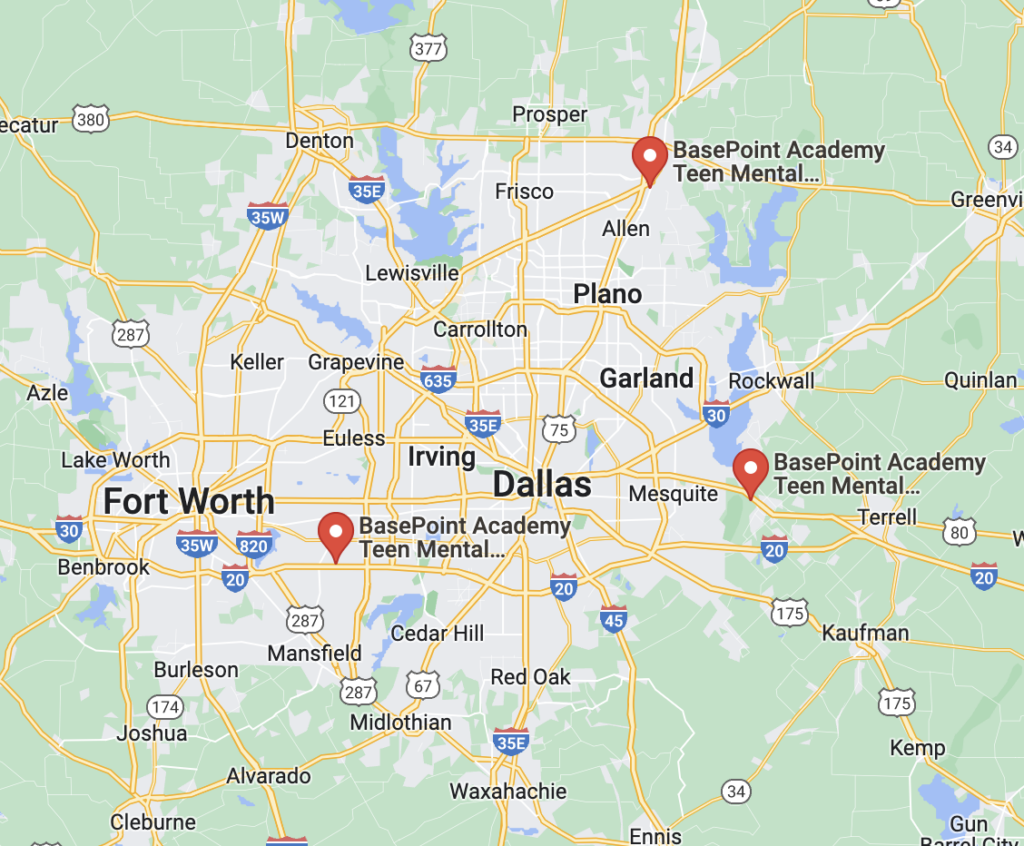
- BasePoint Academy – Arlington, Texas: 3900 Arlington Highlands Blvd, Suite 237, Arlington, TX 76018, United States
- BasePoint Academy – Forney, Texas: 713 W Broad St, Suite 200, Forney, TX 75126, United States
- BasePoint Academy – McKinney, Texas: 4733 Medical Center Drive, McKinney, TX 75069, United States
- BasePoint Academy – Frisco, Texas: 8275 Judges Way, 100i, Frisco, TX 75036
Contact BasePoint Academy Today
Contact us today to schedule a confidential assessment for your teen with a licensed clinician.
You can also get in touch to talk with our mental health experts about treatment needs, care options and your insurance coverage levels.
Call: (972) 357-1749Check Your InsuranceFactors Affecting the Cost of Online PHPs
While many factors can affect online PHP pricing, we’ve briefly outlined the common elements that substantially influence it. It’s essential to note that the program length and other variables will differ from one teen to the next. At BasePoint Academy, we don’t believe in one-size-fits-all treatment. Contact us for an accurate assessment of your teen’s potential treatment costs.
Program Length (Weeks, Sessions Per Week)
Longer programs and higher session frequency increase total cost because billing often uses daily or weekly rates; a 2–4-week program with 4-6 sessions per week will cost substantially less overall than a 6–12-week program or longer, even if per-session rates are similar.
Group vs Individual Therapy Mix
Programs that rely more on group therapy are generally less expensive since group sessions spread clinician time across multiple participants; a higher proportion of individual therapy raises costs because one-on-one sessions require more clinician time. Individual digital therapy sessions often carry higher per-session fees.
Level of Clinical Support
Higher levels of clinical support, which may involve frequent psychiatric oversight, 1:1 nursing or crisis staff availability, and/or intensive case management, drive up costs. This is due to more specialized staff and lower clinician-to-patient ratios. Lower-intensity models with less frequent clinical touchpoints cost less.
Insurance Network Status
If a provider is in-network with a family’s insurer, out-of-pocket costs are usually much lower. Keep in mind, though, copays/coinsurance often apply. Out-of-network providers may bill at standard rates, leading to higher surprise costs or balance billing, making network participation a major determinant of affordability.
Psychiatric Care & Medication Management
Including psychiatric evaluation, regular medication management, and prescribing by psychiatrists increases program cost. This is due to psychiatrists billing at higher rates and medication-related monitoring (labs, side-effect checks) adding to the services rendered. Programs without on-site psychiatric care or with less frequent online psychiatric help are typically less expensive.

Does Health Insurance Cover Online PHPs in Texas?
Yes. However, coverage for online partial hospitalization programs in Texas depends on the insurer, plan type, whether the provider is in-network, and other factors. Many commercial plans offer benefits for virtual mental health care, but they often require prior authorization and clinical documentation. Below, we’ve outlined key factors to consider when using health insurance to cover teen mental health treatment.
Out-of-Network vs In-Network
Choosing an in-network online PHP typically makes services more financially accessible because insurers negotiate lower rates and apply only copays or coinsurance. Out-of-network programs may require full upfront payment or lead to higher balance billing, though some plans offer partial reimbursement when you submit claims.
Parity Laws for Telehealth
Texas and federal parity rules require many insurers to cover telehealth counseling similarly to in-person services when the benefit exists. This ensures coverage for online telebehavioral health programs, such as partial hospitalization, delivered via video conferencing or other means. Exceptions and plan limits can affect which telepsychology services are approved.
Prior Authorization and Medical Necessity
Most insurers require prior authorization and documentation of medical necessity for web-based mental health support, such as online PHPs. Providers must submit clinical assessments, treatment plans, and progress notes to justify the level and duration of care before coverage is approved.
Online PHP Self-Pay Costs and Payment Options
Online teen PHPs offered as self-pay in Texas present varied pricing and payment options. If you’re paying out of pocket, expect weekly, monthly, or per-session billing. Fortunately, many providers, including BasePoint Academy, offer economical alternative structures to spread costs and improve access. Below are standard self-pay models and financing options to compare when evaluating programs.
Contact BasePoint Academy to discuss a cost-effective way to get your teen the necessary online treatment.
Monthly Pricing Models
Some online PHPs convert weekly or per-session fees into a predictable monthly subscription that bundles scheduled internet therapy sessions, care coordination, and basic psychiatric follow-ups. Monthly pricing can be a budget-friendly option, often ranging from the equivalent of four weeks of care up to a modest premium for administrative convenience.
Flexible Payment Plans
Many providers offer interest-free or low-interest installment plans that let families split total program costs over several months; these plans typically require a down payment and a signed agreement and can make otherwise unaffordable programs more attainable without involving insurance.
Sliding Scale Fees (If Applicable)
A few virtual partial hospitalization programs use sliding scale fees based on household income or financial need. This option reduces per-week or per-session rates for qualifying families; availability is limited, requires documentation, and is more common with nonprofit or community-based providers than with private clinics, but it never hurts to inquire.
Are Online PHPs More Affordable Than In-Person Programs?

Yes, the costs of online partial hospitalization programs are generally more affordable than those of in-person programs. They eliminate facility and boarding fees, reduce overhead-driven pricing, and often use more group-based teletherapy, which lowers per-person clinician time costs. With comparable clinical intensity, online treatment programs frequently cost 10–30% less than equivalent in-person care.
Beyond base price differences, online PHPs add savings through flexibility and reduced commuting: you’ll avoid travel time, transportation costs, lost work hours, and school disruption. That flexibility also supports better continuity of care (easier attendance for consecutive sessions). This substantially improves outcomes and reduces the total number of intensive treatment weeks, further lowering overall expenses.
What Is Included in the Cost of Online PHP in Texas?
Costs for online PHPs in Texas typically cover a bundle of clinical and administrative services delivered virtually. At the same time, specific line-items vary by provider. Fees generally include psychiatric care, therapy hours, access to an e-therapy platform, family sessions, and care coordination. Below is a more in-depth explanation of the common inclusions to confirm with any program.
Psychiatric Oversight
Psychiatric oversight commonly involves initial psychiatric evaluation, scheduled medication management visits, crisis consultations as needed, and clinician review of your teen’s treatment progress. Virtual partial hospitalization program costs are typically higher when frequent psychiatrist contact or psychiatrist-led group therapy are involved.
Therapy Hours
Therapy hours encompass individual therapy, group support, and skill-building groups. Modalities like Cognitive Behavioral Therapy (CBT), Dialectical Behavior Therapy (DBT), mindfulness, and psychoeducation may be incorporated into the overall treatment plan. Total weekly therapy minutes, specialty interventions, session length, and daily schedules are key cost drivers and directly determine clinical intensity, staff-to-patient ratios, and expected progress timelines.
Virtual Platform Access
Virtual platform access covers secure internet-based therapy sessions, patient portals, online scheduling, secure messaging, and often digital workbooks, homework modules, and progress-tracking tools. Some vendors add a technology or administrative fee for platform maintenance, data security, and IT support; platforms with integrated outcome measurement or 24/7 messaging typically carry higher operating costs reflected in pricing.
Family Sessions
Family sessions may include scheduled family therapy, parent coaching, psychoeducation, and multi-family groups, to align caregivers with treatment goals and safety planning. These supports are commonly bundled into program packages but may be limited in frequency; additional or extended family work, home-based coaching, or school-focused meetings can be billed separately.
Care Coordination
Care coordination involves initial intake assessment, ongoing case management, communication with schools and outside providers, discharge planning, and referral management. Programs that provide a dedicated care coordinator or social worker who arranges community supports, monitors progress between sessions, and facilitates smooth transitions to ongoing care typically incur higher fees. That said, care coordination significantly improves continuity and reduces readmission risk.
Contact BasePoint Academy Today
Contact us today to schedule a confidential assessment for your teen with a licensed clinician.
You can also get in touch to talk with our mental health experts about treatment needs, care options and your insurance coverage levels.
Call: (972) 357-1749Check Your InsuranceHow Long Does a Virtual Online PHP Last?
Typical virtual online PHPs run from about 2 to 12 weeks. Common models are short courses (2–4 weeks) for acute stabilization, mid-length programs (4–8 weeks) for moderate needs, and extended programs (8–12+ weeks) for complex or chronic issues. Some programs offer stepped care or repeat blocks based on progress.
Duration directly affects total cost because billing is usually weekly or per session. Longer programs multiply those weekly/session rates, raise cumulative psychiatric and therapy hours, and increase care-coordination expenses. Shorter, focused programs reduce total out-of-pocket expense and time away from school/work, while extended care increases overall cost. However, it may lower the average weekly intensity if tapering is used.
Teen Telehealth PHP Costs by Disorder Type
Costs for teen telehealth PHPs often vary by primary disorder because treatment intensity, required specialists, and length of stay differ. Below are common disorder categories and how they typically influence pricing, though this is not an exhaustive list. For specific estimates and in-network options, contact BasePoint Academy for your teen’s confidential mental health assessment.
Online Bipolar Disorder Therapy Cost
Online bipolar disorder therapy in a PHP provides intensive mood-stabilization care combining psychiatric management (medication review, mood monitoring), individual therapy, group psychoeducation on mood regulation, and family support. This comprehensive support manages cycles and safety. Care often requires frequent psychiatrist contact, lab coordination, and close monitoring for medication side effects and suicidality.
Without insurance, expect higher-end weekly rates of roughly $2,500 to $4,500. With insurance, out-of-pocket expenses may range from $0 to about $2,000 weekly, depending on the terms and conditions of your policy.
Online Trauma Therapy Cost
Online Partial Hospitalization Programs (PHP) for trauma focus on trauma-focused modalities like Trauma-Focused Cognitive Behavioral Therapy (TF-CBT). They often involve stabilization, skills training for safety and grounding, and trauma-informed group work. Virtual PHPs that address trauma include more individual therapy and specially-trained clinicians to manage complex post-traumatic symptoms.
Estimated self-pay costs typically run about $2,200 to $4,200 per week without insurance. This may be higher when specialists are involved in your teen’s care, and additional individual session time is needed. Insurance can substantially reduce out-of-pocket costs depending on network status and medical necessity approvals.
Online Anxiety Therapy Cost
Online anxiety therapy delivered through a partial hospitalization program commonly involves structured CBT, exposure therapy, anxiety‑management groups, and brief medication management for severe cases. Programs emphasize skills practice and graded exposures, which can be done effectively in telehealth group formats.
Self-pay weekly estimates are commonly lower- to mid-range, about $2,000 to $3,500 per week without insurance, because group-based exposure work can lower per-person costs. If you’re insured, you may only be responsible for minimal copays or coinsurance when the program is covered.
Online Depression Therapy Cost
Online depression therapy in a partial hospitalization program offers intensive, remote psychotherapy (individual and group), behavioral activation, psychiatric evaluation for antidepressant management, and safety planning for suicidality risk. Treatment programs vary by need for 1:1 support and crisis management resources.
Without insurance, expect to pay roughly $2,000 to $3,800 per week. Costs trend higher when significant one-on-one therapy, close psychiatric follow-up, or more prolonged treatment durations are required. Insurance can reduce or eliminate most out-of-pocket expenses, depending on your benefits.
Online OCD Therapy Cost
Online Obsessive-Compulsive Disorder (OCD) therapy in a partial hospitalization program centers on intensive ERP (Exposure and Response Prevention), repeated therapist-guided exposures, family coaching to reduce accommodation, and psychiatric medication management when indicated; ERP specialist time and high session frequency raise the intensity of clinical support.
Self-pay weekly costs typically run about $2,400 to $4,200 per week without insurance, while in-network coverage and prior authorization often substantially lower out-of-pocket costs for online PHP in Texas.
Online ADHD Therapy Cost
Online Attention-Deficit/Hyperactivity Disorder (ADHD) therapy delivered in a PHP setting emphasizes behavioral interventions, skills training (organization, time management), parent coaching, and medication management. ADHD programs may require fewer intensive daily therapy hours but often include psychiatric oversight for stimulants or nonstimulant interventions.
Self-pay estimates are generally toward the lower end—about $2,000 to $3,000 per week without insurance—because group skills work and shorter individual therapy needs can reduce costs; medication management and common comorbid conditions like OCD or Substance Use Disorders (SUDs) can increase pricing.
Learn More About Virtual Teen Mental Health Therapy Costs at BasePoint Academy
We can help your teen and your family address and overcome mental health concerns with expert mental health therapy, counseling, and psychiatry in a safe environment. Call today to discover the virtual treatment costs associated with long-term healing.
Guides on Costs Without Insurance
Complete Guide to Virtual Mental Health Treatment for Teens
Virtual Mental Health Therapy for Teens
Virtual Mental Health Programs
Helpful Virtual Therapy Financing Articles
Virtual Treatment by Disorder
Online ADHD Therapy for Teens and Adolescents
Online Anxiety Therapy for Teens and Adolescents
Online Bipolar Therapy for Teens and Adolescents
Online Depression Therapy for Teens and Adolescents
Online PTSD Therapy for Teens and Adolescents
Online Trauma Therapy for Teens and Adolescents
Online Psychiatric Disorder Therapy for Teens and Adolescents
Guides on Adolescent Mental Health Insurance Coverage
Mental Health Disorders and Virtual Treatment Statistics for Teen Mental Health in Texas
- The Global Online Therapy and Counseling for Teens market was valued at $1.39B in 2024 and is projected to grow from $1.66B in 2025 to $4.81B by 2032, a 19.7% CAGR. Growth is driven by increased teen mental‑health awareness, wider acceptance, and improved access to digital mental health services.
- Texas news outlet NEWS4SA highlighted a Mental Health America report finding that over 67% of Texas teens who experienced depression last year received no mental health services.
- The Texas Child Mental Health Care Consortium (TCMHCC) encompasses all twelve health-related institutions in Texas. At each institution, teams assess children’s needs and implement new primary care interventions. Additionally, two research registries focused on trauma and depression have been established to gather reliable descriptive, medical, and psychosocial data, aiding in the development of future care pathways. These registries address the understanding that early life experiences can lead to adult mental health challenges, potentially guiding effective youth mental health treatments to reduce vulnerabilities.
- A study published by JMIR Publications shows that engaging in a collaborative care digital mental health intervention correlates with better mental health outcomes for adolescents and children facing self-injurious thoughts and behaviors.
- A recent review of scholarly research conducted by health behavior experts from the Texas A&M University School of Public Health reveals that while adolescents and teens worldwide are more socially connected than ever through online networking sites, they also report higher levels of depression, anxiety, and related mental health challenges.
- A study published in the Journal of Telemedicine and Telecare found that online mental health interventions are effective in managing a variety of mental health conditions among youth.
- A 2026 Children and Youth Services Review pointed out that young people have the highest prevalence of mental health issues but are the least likely to seek traditional treatments for their symptoms. Online peer support can serve as a supplementary strategy to enhance youth mental health. Although research on specific forms of online peer support and their effectiveness is increasing, a clear classification of these types remains underdeveloped.