

Comprehensive Parent’s Guide to Teen Depression and Immediate Treatment
Discovering that your teenager is trapped in the crushing weight of severe depression can leave you feeling incredibly isolated and overwhelmed. Recognizing the warning signs is terrifying, but you do not have to carry this burden alone. Immediate, expert guidance is available at BasePoint Academy in Texas. We can bridge that gap for you right now.
Specialized Adolescent Depression Treatment at BasePoint Academy
Seeing your adolescent suffer through depression is often agonizing, and the urgency to find answers feels overwhelming. You’re not alone in this heavy moment, and you do not have to go through it by yourself. Dedicated, mood disorder-focused support is within reach at BasePoint Academy.
We provide specialized care exclusively for adolescents, ensuring your child receives the focused attention they deserve. With convenient locations in Texas, including in Arlington, Forney, Frisco, North Richland Hills, and McKinney, our team delivers accessible, expert treatment close to home. We believe every young person deserves a compassionate space to heal.
Teens experience emotional distress differently than adults, which is why practitioner-led strategies matter so much. True recovery begins when you take that vital initial step toward treatment. Reach out today to BasePoint’s admissions team by calling (972) 357-1749 and ask about our confidential, no-obligation assessment.
BasePoint Academy Helps Parents Support Teens With Depression
You don’t have to navigate your teenager’s depression alone. Our licensed clinicians provide a confidential mental health assessment to identify the underlying causes of your child’s depression and recommend the right level of care. We’ll also review your insurance benefits, discuss depression treatment options, and help your teen take the next step toward lasting healing.









Teen Depression Treatment Inquiry Form
Contact BasePoint Academy Today
Contact us today to schedule a confidential assessment for your teen with a licensed clinician.
You can also get in touch to talk with our mental health experts about treatment needs, care options and your insurance coverage levels.
Call: (972) 357-1749Check Your InsuranceNavigating Insurance for Teen Depression Treatment
The financial weight of securing specialized care can feel like a deterrent when your child is in crisis. BasePoint Academy stands with you to clear away the confusion surrounding your insurance coverage and benefits. We handle the details so you can focus entirely on your teen’s immediate well-being.
Health insurance policies differ significantly in terms of copays, deductibles, and authorization requirements for adolescent depression treatment programs. The dedicated admissions coordinators at BasePoint work with your insurer to maximize your benefits and minimize unexpected out-of-pocket expenses. To expedite the approval process and ensure your teenager receives timely care, have your primary insurance card completely ready before reaching out. The verification team will need the name of your specific insurance provider, your member ID number, and your group number.
Once we confirm your coverage, a practitioner-led strategy is shaped around your child’s emotional and psychological needs. This evidence-based approach ensures financial clarity and expert clinical insights merge seamlessly. The goal is to build a solid foundation where your family feels fully protected, informed, and supported at every stage. Contact BasePoint Academy today to request a confidential insurance verification and find peace of mind for your teenager.
Recognizing Red Flags: When Teen Mood Swings Become Depression
It’s normal for teenagers to experience emotional ups and downs as they grow. However, when everyday moodiness transforms into deep isolation, constant irritability, or sudden changes in sleep patterns, it often signals something more serious. Recognizing the following shifts within your home is the first step toward protecting your child’s future.
- Persistent Irritability: Frequent outbursts of anger or a low frustration tolerance over minor issues
- Social Withdrawal: Pulling away from long-term friends and losing interest in favorite family activities
- Altered Sleep Patterns: Struggling with insomnia or sleeping excessively throughout the day
- Drastic Energy Shifts: Pervasive fatigue or a noticeable drop in school performance and attendance
- Appetite Fluctuations: Significant weight loss or gain, or a sudden disregard for regular meals
The World Health Organization reports that depression affects roughly 1.3% of adolescents (10 to 14), with that number rising to 3.4% among 15- to 19-year-olds. These statistics reflect real struggles happening in households everywhere, highlighting the vital importance of early intervention. Does your teen’s behavior match the previously mentioned indicators? Contact BasePoint Academy to discuss your child’s mental health symptoms.
The Difference Between Sadness and Clinical Depression
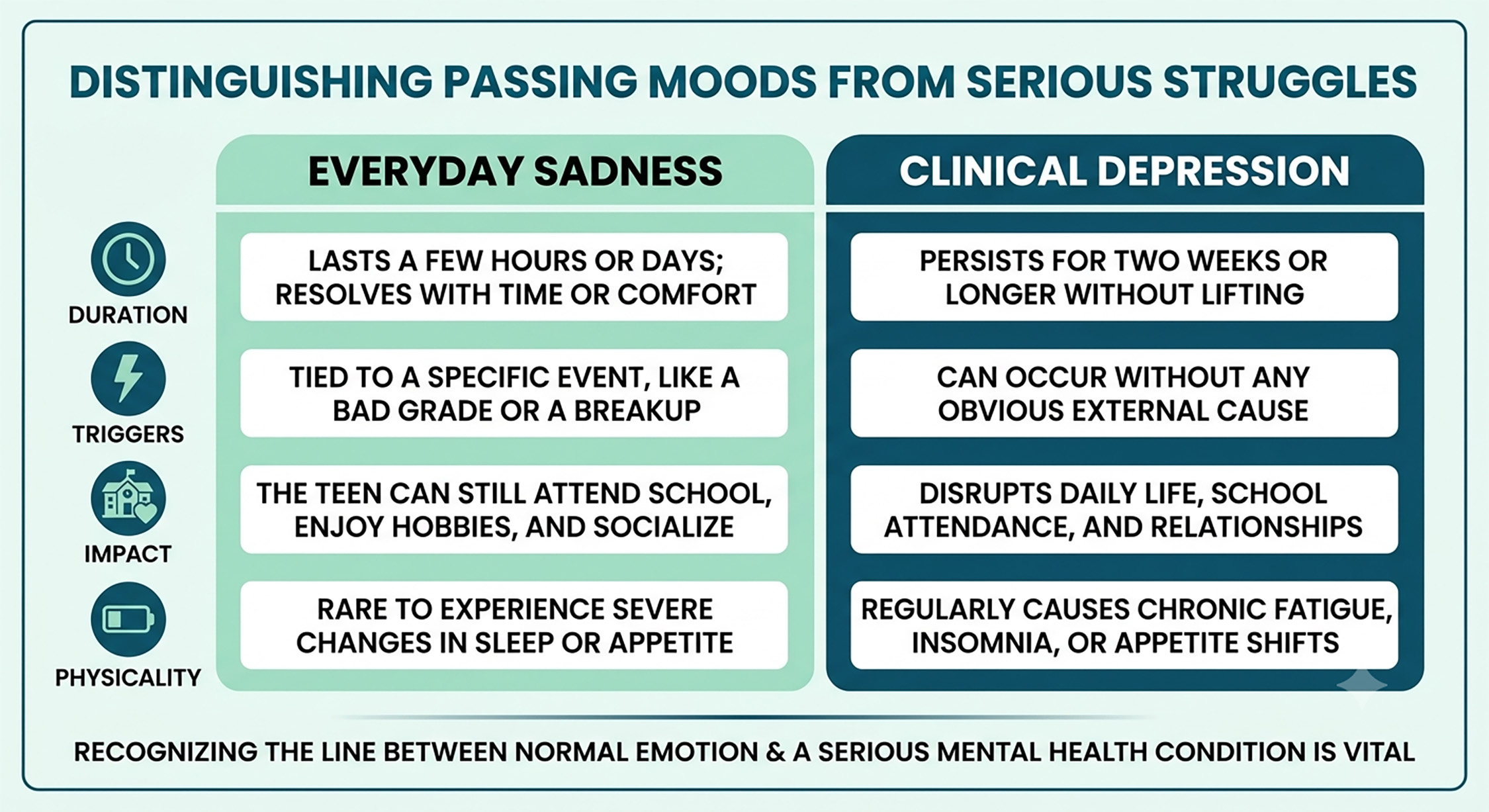
Every teenager experiences bad days, disappointment, and temporary periods of grief or sadness. However, when a dark mood persists for weeks and strips away your child’s ability to function, it is no longer a passing phase. Recognizing the dividing line between normal emotion and a serious mental health condition is vital.
Everyday sadness lasts only a few hours or days, resolving over time. It is often tied to a specific event, such as a breakup or bad grade. When your teenager is sad, they’re still able to attend school and enjoy their hobbies and social time and likely will not experience any major changes in their sleep patterns or appetite.
Major Depressive Disorder (MDD), on the other hand, is persistent, lasting two weeks or more, and can occur without an apparent external cause. This persistent depression is disruptive to your teen’s daily life and relationships and often causes chronic fatigue or changes in their appetite and sleep schedule.
Communication Strategies for Parents of Depressed Teens
Breaking through the silence of a depressed teen requires a shift away from immediate fixes and toward quiet reassurance. When an adolescent feels overwhelmed, intense questioning often causes them to retreat entirely. Approaching them with patient, steady attention ensures they feel protected rather than interrogated during vulnerable moments.
Initiating contact works best during low-pressure circumstances, such as a drive across town or while preparing a meal together. Use open-ended observations rather than direct questions, saying something like, “I’ve noticed you seem to be carrying a lot on your shoulders lately, and I’m here whenever you want to share it.”
Resist the instinct to fix their pain or minimize their struggles with quick solutions. Instead, prioritize validation by acknowledging the depth of their feelings:
- Focus on listening completely before offering any commentary or advice.
- Reassure them that their emotional pain is real and completely valid.
- Avoid statements that sound like, “You have so much to be happy about,” which can inadvertently induce shame.

Creating a Safe Space for Honesty
A secure environment relies on absolute emotional safety, free from judgment, anger, or immediate consequences. Let your teen speak without interruption, keeping your own body language relaxed and your tone calm. When they realize their raw honesty will not result in lectures or panic, they become far more willing to open up.
Broaching the subject of professional mental health care can feel incredibly delicate; call BasePoint Academy at (972) 357-1749 today for personalized guidance on introducing this vital support to your child.
Contact BasePoint Academy Today
Contact us today to schedule a confidential assessment for your teen with a licensed clinician.
You can also get in touch to talk with our mental health experts about treatment needs, care options and your insurance coverage levels.
Call: (972) 357-1749Check Your InsuranceFAQs About Supporting Teens With Depression
Anticipating the complexities of adolescent mental health often leaves you with urgent, practical questions about what comes next. Having clear, concise answers helps eliminate the uncertainty that clouds decision-making during a mental health crisis. Below are direct insights to help you clarify your teen’s immediate needs and understand the parameters of dedicated mental health care.
Does My Teen Need Residential Care or Outpatient Support?
The appropriate level of care depends entirely on safety and symptom severity. While residential treatment is meant for acute crises requiring 24-hour medical supervision, intensive outpatient and partial hospitalization programs allow teenagers to receive evidence-based therapy while continuing to live at home, maintaining their daily routines, and staying connected to their familial support system.
How Do I Know if My Teen Is in Immediate Danger?
Immediate danger manifests through explicit statements about self-harm, talking or writing about suicide, or an abrupt preoccupation with death. Severe, uncharacteristic withdrawal, giving away prized possessions, or a sudden, unexplained calm after deep despair are critical warning signs. If you detect these indicators, seek emergency medical services or call 988 immediately.
What Should I Say if My Teen Refuses to Go to Treatment?
Avoid a power struggle or issuing ultimatums. Focus instead on your deep love and concern for their well-being, saying something like: “I see how much pain you’re carrying, and it breaks my heart. We’re going to meet with professionals together because your safety and happiness matter too much to ignore.”
Can I Visit My Teen if They Are in a Treatment Program?
Because all BasePoint Academy programs use an outpatient model, your teenager returns home to you every evening. There are no restrictive visitation windows because your child is never admitted overnight. Furthermore, we recognize family support as a cornerstone of successful treatment outcomes. At BasePoint, you remain an active, daily participant in your teen’s ongoing recovery and healing.
How Long Does Depression Treatment Usually Last for Adolescents?
There’s no fixed timeline for emotional healing, as every young person progresses at their own pace. Outpatient depression treatment programs typically span several weeks to a few months. The overall duration is continually adjusted based on your teen’s responsiveness, clinical milestones, and the ongoing assessment of our expert care team.
Does BasePoint Academy Accept My Specific Insurance Provider?
Health insurance networks and behavioral health benefits vary significantly based on your individual policy. To get an immediate, definitive answer regarding your plan, deductibles, and co-pays, call our admissions team at (972) 357-1749 for a confidential health insurance benefits verification.
Get Expert Support for Your Teen and Your Family
Our licensed clinicians provide comprehensive mental health assessments, personalized treatment recommendations, and evidence-based care to help your teen move toward lasting healing. We’re also happy to verify your insurance benefits and discuss your treatment options.
Teen Depression and Mental Health Statistics
- The National Alliance on Mental Illness (NAMI) emphasizes the critical importance of early intervention. The average delay between the onset of a mental health condition’s symptoms and receiving treatment is a staggering 11 years. Practically, if an adolescent begins struggling with major depression at 14, they are unlikely to receive care until age 25. For a young person, that means enduring deep pain for nearly half of their entire life before getting support. For far too many, treatment arrives long after the damage has taken root.
- Data from NAMI Texas indicates that approximately 483,000 adolescents across the state experience a major depressive episode every year.
- According to Worldmetrics, 43% of teens struggling with depression fail to recognize their symptoms as indicators of a mental illness. Furthermore, 61% of parents remain completely unaware that their child is dealing with a mental health disorder, while 27% of teens go without care due to financial burdens. These statistics illustrate how stigma, systemic barriers, and a lack of awareness delay essential psychiatric care until an acute crisis forces action.
- The burden of depressive disorders is not distributed evenly across the Texas population. Specific groups — most notably adolescents, women, and individuals impacted by the justice system — face a disproportionately higher rate of these struggles.
- According to the Pew Research Center, depression has grown increasingly prevalent among American teens. This shift is particularly stark among adolescent girls, who are nearly 3 times as likely as adolescent boys to have recently experienced depressive episodes.