

Depression Treatment Center Near Dallas, TX, for Adolescents
If you are searching for a specialized depression treatment center near Dallas, TX, for your adolescent, BasePoint Academy offers a supportive sanctuary where they can heal and thrive. Our structured programs focus entirely on the psychological and emotional needs of youths navigating severe depression.
Through tailored clinical evidence-based therapies, your teen learns vital coping skills so they can manage their symptoms and rebuild their self-esteem. Our local team partners closely with your family to ensure a seamless transition from daily struggles to sustainable wellness. Reach out to us today to schedule a confidential depression assessment and secure the comprehensive care your child deserves.
Depression Treatment for Teenagers at BasePoint Academy
BasePoint Academy, a beacon of hope for struggling adolescents, has dedicated treatment centers in Arlington, Forney, Frisco, and McKinney, Texas. We are ideally positioned to serve teens from these communities as well as those from nearby towns and cities in the Dallas area. We understand that every teen is unique, and we take pride in providing individualized, evidence-based, holistic care.
Our specialty lies in treating various forms of depression in teenagers, including Major Depressive Disorder (MDD), persistent depressive disorder (dysthymia), bipolar disorder, and Seasonal Affective Disorder (SAD). We also offer care for conditions like atypical depression, psychotic depression, Premenstrual Dysphoric Disorder (PMDD), situational depression, substance-induced depression, and treatment-resistant depression. Our professional and empathetic team is committed to ensuring every teen under our care feels safe, supported, and understood.
What Is Depression?
Clinical depression is a serious mood disorder and goes far beyond feeling sad. It is also called major depression or major depressive disorder. Depression causes severe symptoms and significantly affects the way in which a teen handles daily activities and how they feel.
Diagnosis of depression must fit the criteria outlined in the Diagnostic and Statistical Manual of Mental Disorders, 5th edition (DSM-5), a diagnostic tool published by the American Psychiatric Association. To be diagnosed with depression, your teen must exhibit symptoms for at least 2 weeks. Although the symptoms vary depending on the type of depression, they generally include having low energy, thoughts of self-harm or suicide, changes in eating behavior, and sleep changes, to name a few.
Teen Depression Treatment Coverage at BasePoint Academy
Our complimentary depression assessment with a licensed clinician allows us to provide a personalized recommendation for the appropriate level of care for your teen struggling with depression. We also offer assistance in verifying your insurance coverage levels.
Call (972) 357-1749 or fill out our inquiry form today to schedule a same-day assessment and learn more about our teen depression treatment near Dallas.






Teen Depression Treatment Inquiry Form
Does Insurance Cover Depression Treatment for Teens?
A variety of health insurance providers cover treatment for depressive disorder in teenagers. The Affordable Care Act (ACA) mandates that all health insurance policies offer some level of coverage to treat mental health conditions. Molina Healthcare, UnitedHealthcare, Anthem, Humana, Aetna, Cigna, and Carelon Behavioral Health are among the insurance companies that provide mental health treatment coverage.
While BCBSTX plans, Aetna plans, Cigna plans, UHC plans and others typically cover treatment for depression, not all coverage is the same. It is important that you verify your insurance coverage to gain a better understanding of its benefits and limits. The easiest way to verify your insurance coverage for in-person or online treatment for depression is to call BasePoint Academy at (972) 357-1749. Our team is committed to delivering expert depression treatment tailored to your teenager’s needs, and we’ll work directly with your insurance provider to help maximize your coverage and minimize out-of-pocket costs.
Different Types of Clinical Depression
There are several different types of clinical depression with different symptoms. With treatment, your teenager can overcome the symptoms of depression and go on to live a long and productive life. The following are some of the types of depression, but it is not a complete list.
Major Depressive Disorder (MDD)
Major Depressive Disorder (MDD) is a severe form of depression and one of the most common forms. Signs of depression in teens include a depressed mood, lack of energy, feelings of hopelessness, difficulty concentrating, and sleep disturbances. Your teenager may not have interest in the activities they once enjoyed, and you may notice their weight fluctuating.
Persistent Depressive Disorder (Dysthymia)
Persistent Depressive Disorder (PDD) used to be called dysthymic disorder or dysthymia. Generally, the symptoms of this condition are less severe than in MDD, but they typically last much longer. Some report experiencing symptoms of PDD for two years or more. The symptoms make it difficult to enjoy a joyous occasion and often interfere with school, work, and relationships.
Bipolar Disorder (Bipolar Depression)
Bipolar disorder used to be called manic depression or manic depressive illness. Bipolar disorder in teens is characterized by episodes of depression during which your adolescent may feel sad, hopeless, or indifferent. These periods are broken up by manic episodes in which they experience an elevated mood and feel very happy with a marked increase in activity.
Seasonal Affective Disorder (SAD)
Seasonal Affective Disorder (SAD) is also referred to as seasonal depression. It is a form of Major Depressive Disorder (MDD) that generally emerges during the fall and winter months. Seasonal affective disorder is triggered by the change of seasons and leaves your teenager feeling sad, with a loss of interest in their usual activities.
Atypical Depression
Atypical depression is also called major depressive disorder with atypical features. Symptoms of this condition vary slightly from major depressive disorder. The significant difference is that teenagers with atypical depression experience a temporary improvement in their mood in response to a positive event. You may also notice your teen has an increased appetite and has developed a sensitivity to rejection.
Teenage-Onset Depression (Early-Onset Depression)
Although depression can begin at any age, early-onset depression describes depression in childhood and adolescence. Interventions for early-onset depression are often longer than those used to treat late-onset depression, which typically begins around age 65 or older. In both cases, medication is typically part of the treatment plan and is customized to address your teen’s symptoms.


What Is a Depression Treatment Center for Teenagers Near Dallas?
Teen depression is a complex issue that requires specialized care. As such, depression treatment for adolescents is best handled by licensed mental health professionals with extensive experience in managing a range of mental health conditions, some of which can lead to depression.
In today’s fast-paced society, teenagers grapple with various pressures from school, sports, and social circles. These stressors are often triggers for teenage depression, particularly because they are undergoing hormonal changes, experiencing shifts in brain chemistry, and may be dealing with the aftermath of early childhood trauma or managing an underlying medical condition that heightens their risk for depression.
At BasePoint Academy, we offer comprehensive depression treatment for teens near Dallas, TX. Our experienced mental health professionals are equipped with the necessary tools and resources to provide the best possible care. Our tailored programs address your child’s unique needs and circumstances.
Our approach to treating depression in teenagers is holistic, empathetic, and evidence-based. We not only focus on alleviating symptoms but also aim to equip teens with coping mechanisms so they can manage their stress and prevent future depressive episodes. If you’re wondering how to help with teenage depression, rest assured that our team is here to provide the necessary guidance. With our professional help, your teenager can regain control of their life and look forward to a brighter future.
Types of Treatment Programs for Teen Depression
Depression-focused Partial Hospitalization Programs (PHPs) and Intensive Outpatient Program (IOP) at BasePoint Academy offer teenagers highly structured and effective care. These programs allow teens to receive the help they need and return home at night to practice the skills they’ve learned.

BasePoint Accepts health Insurance for Teen Depression Treatment
We accept most major health insurance providers in Texas and can check your depression treatment coverage levels on your behalf
ADOLESCENT DEPRESSION TREATMENT NEAR DALLAS, TX
Base Point Academy has treatment facilities in Arlington, Forney, Frisco, and McKinney, Texas. Each of these luxury teen mental health facilities in the Dallas area offers the same level of care from licensed mental health professionals who focus on providing teenagers with the tools and resources they need to heal from depression and other mental health conditions.
- Arlington, Texas: 3900 Arlington Highlands Blvd Suite 237, Arlington, TX 76018
- Forney, Texas: 713 W Broad St Suite 200, Forney, TX 75126
- Frisco, Texas: 8275 Judges Way #100i, Frisco, TX 75036
- McKinney, Texas: 4733 Medical Center Dr, McKinney, TX 75069
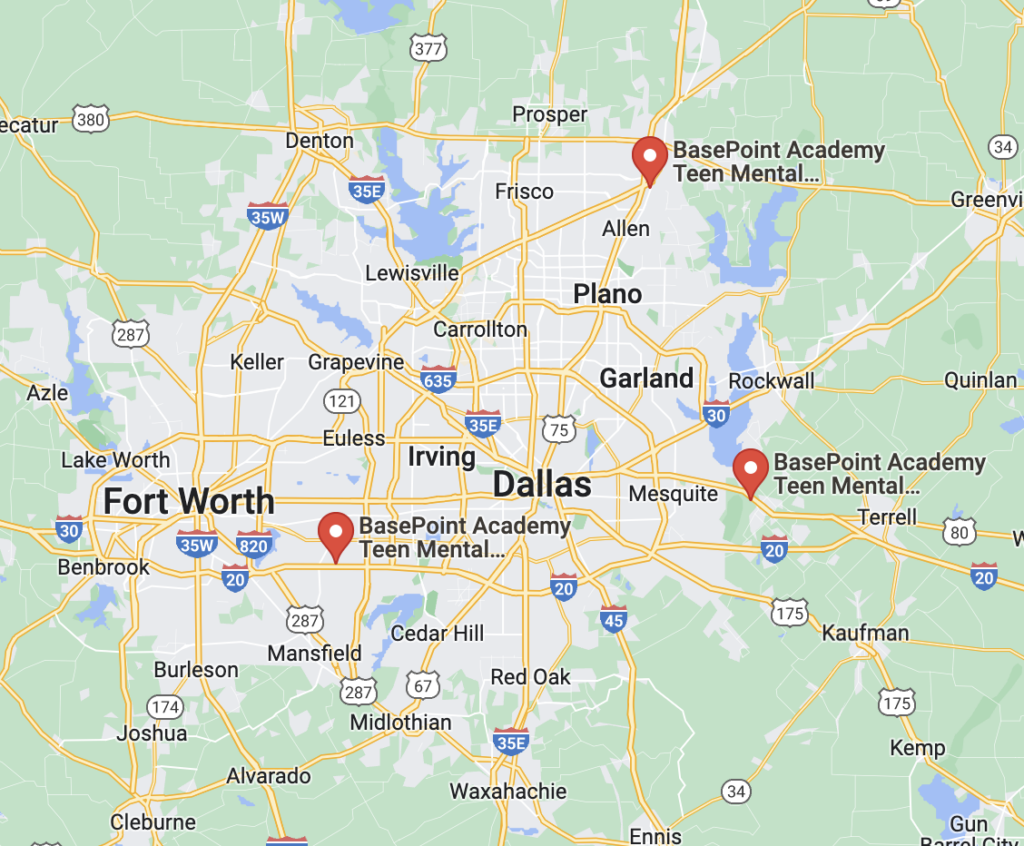
Depression Treatment Center in Arlington, Texas
Arlington, in Tarrant County, Texas, is 20 miles west of Dallas and 12 miles east of Fort Worth. Arlington is a major center for education, business, and entertainment. It’s the home to the University of Texas at Arlington, which has a modern planetarium.
Arlington hosts River Legacy Parks, which include trails cut through hardwood forests that are rich with wildlife. Arlington is also home to the Dallas Cowboys, the Texas Rangers, and the International Bowling Museum and Hall of Fame.
- BasePoint Academy – Arlington, Texas: 3900 Arlington Highlands Blvd Suite 237, Arlington, TX 76018
Depression Treatment Center in Forney, Texas
Forney, Texas, is west of the Dallas-Fort Worth area in Kaufman County. With a growing population of over 27,000 people, it has been named the “Antique Capital of Texas” by the Texas legislature. When visiting Forney you can go on sightseeing tours and visit the Gentle Zoo, Bell Park, or the Spellman Museum of Forney History.
- BasePoint Academy – Forney, Texas: 713 W Broad St Suite 200, Forney, TX 75126
Depression Treatment Center in McKinney, Texas
McKinney, Texas, is in Collin County, roughly 30 miles north of Dallas and part of the Dallas-Fort Worth metroplex. As a growing city with a population of over 200,000 people, it is also home to a variety of industries and businesses.
- BasePoint Academy – McKinney, Texas: 4733 Medical Center Dr, McKinney, TX 75069
Depression Treatment Center in Frisco, Texas
Frisco, in Collin and Denton counties, is approximately 25 miles north of Dallas and is known for its strong school districts, family-oriented neighborhoods, and rapid growth. Frisco is a major hub for business, technology, and sports, and is home to several corporate headquarters and professional sports venues.
The city also offers abundant parks, trails, and community spaces, contributing to a high quality of life for families throughout North Texas.
- BasePoint Academy – Frisco, Texas: 8275 Judges Way #100i, Frisco, Texas, 75036
Types of Therapy for Depressive Disorder in Teens
Therapy is a crucial component of depression treatment. There are several types of therapies that can be used to treat depressive disorders in teens. Read on to learn more about some of the therapies we use in depression treatment at BasePoint Academy.
Psychodynamic Therapy Techniques for Depression
Psychodynamic therapy strategies help teenagers gain a greater awareness of their thoughts and emotions, thus decreasing symptoms of depression and reducing emotional suffering. Adolescents today experience a unique set of stressors that is far different than that of previous generations.
For some teens, managing these pressures can seem impossible. Psychodynamic therapy helps them evaluate conscious and unconscious patterns and how they affect their behavior.
Cognitive-Behavioral Therapy (CBT) for Adolescent Depression
Cognitive-behavioral therapy for teens is a type of behavioral talk therapy that is a short-term interventional strategy. It helps teens explore the connections between their thoughts, emotions, and behaviors. Research has shown this evidence-based approach to be effective for teen depression.
Dialectical Behavior Therapy (DBT) for Adolescent Depression
Dialectical behavior therapy for teens is a form of talk therapy that blends opposite ideas to help your child accept life within the present parameters and identify healthier coping skills. It empowers your teen to address their pain and cultivate desirable behaviors while establishing a baseline for resiliency.
Experiential Therapy for Depression in Teenagers
Experiential therapy engages teens in activities that are generally more interactive than traditional talk therapy, including art therapy, drama therapy, and music therapy. This evidence-based approach helps teenagers address thoughts and emotions that are centered on past events; your child will also establish healthier thought patterns to reduce symptoms of depression.
Family Therapy for Teenagers With Depression
Many of the teenagers at BasePoint Academy engage in comprehensive family therapy to give everyone the opportunity to work through challenges and difficulties in a safe space. Highly qualified therapists help families navigate issues that are common when teens are depressed, such as disruptive behaviors, relationship problems, self-esteem issues, and grief.
Group Therapy for Adolescents With Depression
Group therapy is highly effective, allowing teens to benefit from long-term interactions in a group setting. This helps your child develop new skills and habits, including coping and interpersonal skills. Group therapy at BasePoint Academy is led by qualified therapists, giving your teen the opportunity to grow in a like-minded and supportive environment.
Individual and Person-Centered Depression Therapy for Adolescents
Nearly all teenagers at BasePoint Academy are involved in one-on-one therapy. Teenagers may attend person-centered therapy for depression, during which counselors use non-directive talk therapy to help your child discover personal solutions. This allows them to take charge and learn strategies they can use moving forward while affecting change in their lives.


CAUSES OF DEPRESSION IN TEENS
Understanding the precise causes of adolescent depression can be complex, as every teenager has unique experiences and reactions. However, there are several common biological and environmental factors that can contribute to the onset of depression among teenagers. Keep reading to learn more about a few of these factors.
- Hormonal Changes: One significant cause of depression in teenagers is hormonal changes. As teens grow, their bodies undergo numerous transformations, including shifts in hormone levels. These changes can affect mood and emotions, potentially leading to depression.
- Changes in Brain Chemistry: Changes in brain chemistry are another contributing factor. Neurotransmitters, which are chemical messengers in the brain, can influence mood and behavior. An imbalance in these chemicals can result in symptoms of depression.
- Early Childhood Trauma: Early childhood trauma, such as neglect, abuse, or loss, might cause long-lasting emotional scars that manifest as depression during adolescence.
- Inherited Traits: Inherited traits or genetics play a crucial role, as well. If a close family member has had depression, your teenager may be more likely to develop it.
- Negative Thinking Patterns: Negative thinking patterns significantly contribute to depression among teenagers. Teens who tend to view the world pessimistically or feel overwhelmed by life’s challenges are more susceptible to depressive symptoms.
- Medical Conditions: The ongoing stress and challenges of dealing with certain medical conditions, especially chronic illnesses, can trigger depressive symptoms in teenagers.
- Technological Environment: Today’s technological environment can contribute to depression in teens. Excessive screen time, cyberbullying, and social media pressure can all negatively affect your child’s mental health.
Understanding these causes is the first step towards managing and overcoming teen depression. BasePoint Academy is here to help your teenager navigate this condition, providing professional guidance and empathetic support throughout their treatment program.
Warning Signs of Depression in Adolescents
It may be difficult to identify the symptoms of depression in your teen because teenagers are typically moody. Your child may not be aware they are depressed, but early treatment is essential to prevent the worsening of symptoms and long-term effects. Many times the first thing you’ll notice is your teenager being more withdrawn than usual.
It is crucial to be vigilant and pay attention to your teenager’s behaviors. Depression is internal, often causing more disturbance in the teenager’s life than in the lives of the people around them. For this reason, it can take some time for you to recognize the symptoms. Signs of depression in teens include, but are not limited to:
- Extreme or prolonged sadness
- Irritability
- Low self-esteem
- Unexplained or explained feelings of guilt
- Sensitivity to failure or rejection
- Loss of interest or motivation
- Isolation
- Lethargy
- Restlessness
- Feelings or expressions of worthlessness
- Poor grades or unusual drop in academic performance
- Outbursts of anger
- High-risk for self-harm
- Insomnia
- Changes in appetite
- Unexplained weight gain
- Substance use and/or abuse
- Thoughts of suicide or death


DON’T IGNORE THE SYMPTOMS
Major depressive disorder is a serious concern that affects many high school-aged students. Research indicates about 40% of 9th- through 12th-graders experienced feelings of sadness or hopelessness in 2023. It is important that you do not ignore the symptoms of depression in your child.
When it comes to your teen’s mental health, BasePoint Academy is here to help them navigate challenges. Our skilled and highly qualified team of professionals offers a wide range of therapeutic interventions at our luxury facilities near Dallas to help your teen heal and thrive:
- Individual and group therapy sessions
- Various psychotherapy approaches, including expressive art, role playing, and guided imagery
- Cognitive-Behavioral Therapy (CBT)
- Experiential therapy
- Solution-focused therapy (person-centered therapy)
- Motivational Interviewing (MI)
- Trust-Based Relational Intervention (TBRI)
- Skills coaching and academic support
- Life skills management
- Family therapy
- Relapse prevention
- Suicide prevention
- Medication management (antidepressant medications and other prescriptions)
- Mindfulness and meditation
Healthy interpersonal skills and early interventions in your teen’s life will help them overcome self-harm, substance abuse, and other risky behaviors. Our treatment programs are tailored to your child’s mental health needs. Call today to schedule a confidential assessment with our team so we can help your teen acheive sustainable recovery.
Depression Testing and Assessment for Teenagers
Depression testing and assessment for adolescents is a crucial part of identifying your child’s conditions and developing an individualized and evidence-based plan of care. There are several online depression tests that give you instant results; however, these results can give you a false positive or negative. A mental health professional should administer and interpret your teen’s assessment to ensure accuracy.
BasePoint Academy offers a confidential assessment for your teenager to identify challenges they may be having with mental health conditions like depression. Not all teenagers exhibit classic signs of depression, so a confidential assessment with an experienced mental health professional will ensure your teenager gets the help they need when they need it.
What Is the Admissions Process for an Adolescent Depression Treatment Program at BasePoint Academy?
The admissions process for a depression treatment program for adolescents at BasePoint Academy involves several steps to ensure your child receives the appropriate customized treatment program. The specific steps and order in which you encounter them may vary, but here is a general overview of what you can expect:
- Initial Contact: When you initially make contact, we verify your insurance coverage and determine if prior authorization is required before treatment begins. We can also help you gather the documents needed for prior authorization.
- Assessment and Evaluation: BasePoint Academy will offer a complimentary same-day assessment to identify the challenges your teenager may be experiencing. From this assessment — and a further evaluation when you decide to enroll in our program — we customize a treatment protocol for your child’s depression.
- Admissions Coordination: We’ll coordinate your teen’s admission into an outpatient program at BasePoint Academy. We’ll provide step-by-step instructions on the type of documentation you might need to provide, the items your child should and should not bring with them to the treatment center, and a thorough understanding of the customized treatment plan developed for your teenager.
- Orientation and Program Introduction: On the first day, you and your adolescent go through a program orientation and introduction to increase your and your teenager’s comfort level with where they will be during the day.
- Active Participation and Progress Monitoring: We expect that your teenager will actively participate in treatment. Our team will monitor your child’s progress and adjust their customized treatment plan as necessary.
Statistics on Depression in Texas Adolescents
- Over 500,000 children in Texas were diagnosed with depression or anxiety in 2020, according to Houston Public Media. This was a 23% increase over the past few years.
- According to the 2022 San Antonio’s Teen Mental Health Survey, 59% of surveyed teens identified school as their top mental health stressor, while 37% felt unable to complete daily tasks and 24% turned to smoking, vaping, alcohol, or illicit drugs to manage their symptoms.
- A UT Southwestern study published in Suicide and Life-Threatening Behavior revealed that 90% of youths treated for depression in Texas experienced suicidal ideation and nearly 50% reported at least one attempt.
- According to NAMI, 314,000 Texans between the ages of 12 and 17 have depression.
- Texas Standard reported data from 2021 showed 1 in 3 Texas high school students experienced depression, stress, or anxiety during the preceding month. Furthermore, nearly a quarter of those specific students had seriously contemplated suicide.
Contact BasePoint Academy for Teen Depression Therapy Today
Has your teen exhibited any of the depression symptoms discussed here? If you are concerned about your child’s mental health, contact BasePoint Academy to discuss a treatment plan.